


Coloured Braces for Teenagers: What Armadale Teens and Their Parents Should Know
If you’ve got a teenager who’s just been told they need braces, chances are the first question out of their mouth wasn’t “how does dentistry work?” It was probably, “Can I pick the colours?” Good news: yes, they absolutely can. And honestly, that’s one of the best things about traditional silver braces with coloured elastic ties.
At Michael Woods Orthodontics in Melbourne, we see this every single day. A teen walks in a little nervous, spots the colour chart on the wall, and suddenly the whole mood shifts. Braces go from something that’s happening to them to something they get to personalise. That matters a lot, especially during the teenage years.
This guide covers everything Armadale teens and their parents need to know about coloured braces, from how the elastics actually work, to which colours are trending, to how to look after them properly.
Dentistry That Works and Looks Good: How Coloured Elastic Ties Work
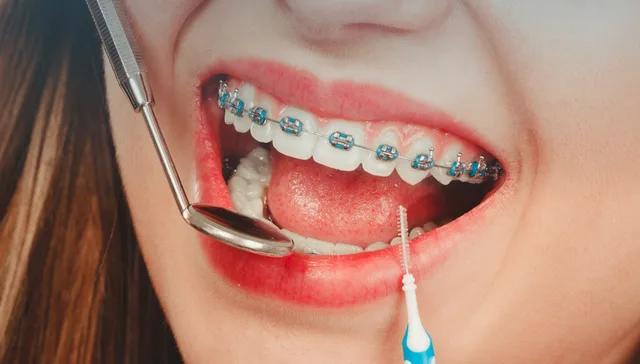
Traditional silver braces are made up of a few key parts: brackets bonded to each tooth, an archwire that runs through them, and small elastic ties (also called ligatures or o-rings) that hold the wire in place. Those elastic ties are where the colour comes in.
Here’s what you need to know:
- The elastics are functional first. They hold the archwire snugly against each bracket, which is what makes the whole orthodontic treatment system work.
- The colour is a bonus. Orthodontists now offer these ties in a huge range of shades, so teens can make their brace look like their own.
- They’re changed at every appointment. This means your teen gets a fresh colour pick every 4 to 8 weeks, and there’s no long-term commitment to any single shade.
This part of dentistry hasn’t changed in how it works clinically. What’s changed is how much teens get to enjoy it.
What Colours Are Available? A Guide for Armadale Teens
The colour options for braces with coloured elastics in Melbourne clinics are genuinely impressive. From barely-there to full-on bold, there’s something for every personality.
Popular Colour Categories
Colour Type | Examples | Best For |
Subtle / Natural | Clear, silver, grey | Teens who want braces to blend in |
School Colours | Blue and gold, red and black | Showing school pride |
Bold and Fun | Hot pink, electric blue, purple | Maximum self-expression |
Seasonal | Orange and black (Halloween), red and green (Christmas) | Mixing it up for events |
Skin Tone Friendly | Jewel tones for olive/dark skin, pastels for fairer tones | Complementing your look |
Popular choices among teens include matching braces to their school colours, their formal outfit, or even seasonal celebrations like Easter and Christmas.
Colours to Be Careful With
Not all colours behave the same over a 4 to 8-week wear period. Here’s what to watch out for:
- White and clear elastics can stain if you eat a lot of tomato sauce, curry, or other intensely coloured foods.
- Yellow tends to look like food debris and can be unflattering on most teeth.
- Silver or grey is a reliable go-to if you want something subtle that won’t show staining.
In 2025, some of the most popular choices among Australian teens include school or sports team colours, coordinated colours with friends, and themed combinations for occasions like Halloween and Christmas.
Are Coloured Braces Just About the Look? (No, and Here's Why That Matters)
This is a fair question from parents, and the answer is a clear no. From a clinical standpoint, orthodontists report that when patients are excited about their braces, they’re more likely to follow care instructions, attend appointments, and complete their treatment plans without delays.
In other words, a teen who looks forward to their next adjustment appointment is a teen who sticks with their orthodontic treatment. That’s not a small thing.
What Traditional Braces Can Treat
Fixed braces remain one of the most versatile tools in orthodontics. They’re used to treat:
- Crowding: when teeth don’t have enough room and overlap
- Spacing: gaps between teeth
- Overbite and underbite: where upper or lower teeth sit too far forward or back
- Crossbite: where upper and lower teeth don’t meet correctly
- Open bite: where the front teeth don’t close together
The WHO ranks malocclusion as the third most critical oral health concern, with research showing it affects between 39% and 93% of adolescents and teenagers worldwide.
Traditional fixed braces are considered the gold standard for managing more complex presentations of these dental problems.
How Often Are Colours Changed? The Dentist Appointment Teens Actually Look Forward To
At every orthodontic appointment, your orthodontist will ask which colours you’d like, and that’s where teens can get creative. Adjustments typically happen every 4 to 8 weeks, which means teens get a new colour pick roughly 6 to 15 times over the course of their treatment plan.
Some teens plan: Christmas reds and greens in December, pastel tones for the school formal season, their favourite AFL team’s colours for finals time. It becomes a small ritual that makes each dental visit feel like something to look forward to rather than something to dread.
For parents, this frequency also means regular contact with your orthodontist, which is good for monitoring progress and asking questions about your teen’s dental health.
Caring for Braces with Coloured Elastics: Practical Tips for Teens
Looking after your braces properly keeps your teeth and gums healthy and makes sure your treatment goes smoothly. Coloured elastics don’t require anything special beyond the standard brace care routine, but here’s a refresher that’s worth bookmarking.
Brushing and Flossing Basics
Good oral hygiene is non-negotiable during orthodontic treatment. Here’s what to do:
- Brush after every meal using a soft-bristle toothbrush. Angle the brush toward the gumline to clean around each bracket.
- Use an interdental brush (those tiny Christmas-tree shaped ones) to clean between brackets and under the archwire.
- Floss daily using a floss threader or orthodontic flosser to get between teeth.
- Check your work in the mirror to make sure there’s no plaque or food sitting around the brackets.
- Fluoride toothpaste helps protect tooth enamel during the extended period you’re wearing braces.
Brushing and flossing techniques do take a little practice with braces in place, but once it becomes a habit, it’s quick and easy.
Foods to Avoid
Some foods can dislodge brackets, snap the archwire, or stain the elastic ties:
Avoid | Why |
Hard foods (nuts, hard lollies, crusty bread) | Can break brackets or bend the archwire |
Sticky foods (toffee, chewy lollies, dried fruit) | Can pull elastics off and trap plaque |
Sugary drinks and snacks | Increase the risk of decay and plaque around brackets |
Intensely coloured foods (tomato sauce, curry) | Can stain clear or light-coloured elastics |
Keeping Gums Healthy
Brackets can make it easier for plaque to build up along the gum line, which can lead to gum irritation. Regular brushing along the gumline, using mouthwash, and keeping up with dental check-ups during your treatment will keep your gums in good shape.
Australian data shows that around 1 in 10 people who saw a dental professional received public dental care, and around 3 in 10 who needed to see a dental professional delayed or skipped an appointment, with cost being the main barrier. If cost is a concern for your family, it’s worth asking about payment plans, which many Melbourne orthodontic practices offer to make treatment more accessible.
General Dentistry vs. Orthodontics: Are Traditional Braces Right for Your Teen?
Traditional braces vs. clear aligners is a question that comes up a lot in our Melbourne practice. Here’s an honest comparison to help you understand the difference.
Traditional Braces vs. Clear Aligners: A Quick Comparison
Feature | Traditional Braces | Clear Aligners (e.g., Invisalign) |
Visibility | Silver metal with coloured elastics | Nearly invisible |
Removable? | No, fixed to teeth | Yes, removable |
Treatment consistency | Always working, never forgetting to wear | Depends on compliance |
Best for | Wide range of cases, including complex | Mild to moderate cases |
Adjustments | Every 4 to 8 weeks | Changed at home every 1 to 2 weeks |
Customisation | Colour choices at every visit | Limited aesthetic options |
For many teenagers, the fixed nature of traditional braces is actually an advantage. There’s no temptation to take them out before sport or school photos, which means treatment stays on track. Paediatric dentistry and orthodontics specialists often recommend fixed braces for teens whose cases involve more significant bite issues or crowding, because consistency of force is key to good outcomes.
Invisalign has been adopted by over 4.5 million teenagers globally, and clear aligners continue to grow in popularity, but they’re not the right fit for every case. That’s exactly why a proper consultation matters, as only a qualified orthodontist can assess what your teen’s teeth and jaw actually need.
Whether the best answer is metal braces, clear aligners, or another approach entirely, the right treatment plan is the one designed specifically for your child.
Book a Consultation at Michael Woods Orthodontics
If your teen is ready to explore their options and you’re based in Armadale, Toorak, Malvern, or the surrounding Melbourne suburbs, we’d love to help. At Michael Woods Orthodontics, we take a genuinely patient-focused approach, especially with younger patients who might feel a little nervous about starting treatment.
Our team will walk you through exactly what your teen’s teeth need, what treatment options suit them best, and what the process looks like from start to finish. We also offer flexible payment options to help make orthodontic treatment accessible for Melbourne families.
Book a consultation today, and let’s find the right fit for your teen’s smile.
Frequently Asked Questions
Do the colours affect how the braces work?
No. The coloured elastic ties are purely cosmetic in terms of the shade chosen. They still function the same way mechanically, holding the archwire in place regardless of colour.
How long do the elastics last before they fade or stain?
Most elastics last 4 to 8 weeks before the next adjustment. Some lighter colours may fade or stain faster if you eat a lot of coloured foods, which is worth keeping in mind when choosing.
Can teens switch colours every appointment?
Absolutely. That's the whole point. There's no requirement to keep the same colour, and most teens love changing it up at each dental visit.
Are coloured elastics more expensive than regular ones?
Generally, no. Coloured ties are a standard part of the treatment at most orthodontic practices and don't add any extra cost.
What's the best colour to make teeth look whiter?
Darker shades like navy, royal blue, and deep purple tend to contrast with teeth in a way that makes them appear whiter. Avoid white and yellow, which can have the opposite effect.

Leave a Reply