


What to Expect at Your First Orthodontic Consultation in Armadale
Thinking about orthodontic treatment but not quite sure what happens at that first appointment? You’re not alone. For a lot of Armadale patients, the initial consultation is the most unfamiliar part of the whole journey. What does the orthodontist actually check? Will you walk out with braces already on? What does it cost?
The good news is that a first orthodontic consultation in Armadale is genuinely low-pressure. It’s an information-gathering session as much as it is an assessment. At Michael Woods Orthodontics in Melbourne, the goal of that first visit is simple: to give you a clear picture of your teeth and jaw, lay out your options, and let you make an informed decision without any pressure.
This guide walks you through exactly what to expect, step by step.
Quick Overview: What Happens at a First Orthodontic
| Stage | What Happens |
|---|---|
| Paperwork and history | Medical and dental history form completed before or on arrival |
| Clinical examination | Teeth, jaw, bite, and gums were assessed by the orthodontist |
| X-rays and records | OPG and cephalometric X-rays, photographs, and possibly digital scans |
| Treatment discussion | Options explained, including braces, aligners, and timelines |
| Cost and payment | Fees outlined, payment plans discussed, insurance questions answered |
| Questions | You can ask for anything you need before leaving |
A first orthodontic consultation usually takes place in two parts: records first, then a discussion with your orthodontist where they walk you through their findings. Most appointments run between 30 and 60 minutes.
Before You Arrive: What to Prepare
Getting a bit of prep done before your appointment makes the whole thing smoother. Here’s what to bring or think about:
- Medical and dental history: Most practices will send you a form to complete beforehand. If not, arrive a few minutes early to fill it in.
- Previous dental records or X-rays: If your regular dentist has taken X-rays recently, ask if you can bring a copy. It’s not essential, but it can be helpful in context.
- Your private health insurance policy details: Check your level of extras cover before you go. Some major health insurance companies include orthodontic benefits under their hospital or extras cover.
- A list of questions: Jot down anything you want to ask. We’ve included a suggested list later in this article.
- If bringing a child: Let them know it’s just a look and a chat. No brace goes on that day.
The Clinical Examination: What the Orthodontist Actually Looks At
This is the core of the consultation. Your orthodontist will perform a thorough examination of your teeth, gums, and jaw, checking for issues like misalignment, overcrowding, overbites, underbites, and any potential problems that could affect your treatment.
More specifically, they will assess:
- Teeth Alignment: How your teeth sit individually and in relation to each other. Crooked teeth or crowding are noted here.
- Bite Assessment (occlusion): How your upper and lower teeth come together. This covers overbite, underbite, crossbite, and open bite issues.
- Jaw Position and Facial Profile: The jaw plays a big role in how teeth function. The orthodontist will determine the exact tooth movements required to straighten your teeth and align your jaw.
- Soft Tissue and Gum Health: Orthodontic treatment cannot begin if there are active gum disease or untreated dental problems. Gum disease needs to be addressed first, so this check matters a lot.
- Overall Oral Health: Gum disease and tooth decay are flagged at this stage. If there are existing dental issues, you may be referred back to your dentist before orthodontic treatment begins.
It’s worth knowing that this kind of assessment goes well beyond a standard dental check-up. A general dentist looks at the health of individual teeth. An orthodontist, who has completed an extra three years of specialist training after their dental degree, is specifically trained to look at how the whole system works together, including the teeth and jaw relationship, facial structure, and bite mechanics.
Orthodontists are dental specialists who help straighten your teeth, bite and jaw, completing an extra three years of training after their dental degree.
X-rays and Records: The Foundation of Your Treatment Plan
Before your orthodontist can recommend anything, they need a detailed picture of what’s happening beneath the surface. That’s where X-rays and clinical records come in.
Types of records typically taken at a first consultation:
| Record Type | What It Shows |
|---|---|
| Panoramic X-ray (OPG) | Full view of all teeth, roots, and jaw in one image |
| Lateral cephalometric X-ray | Side profile of the skull and jaw, used for measuring bone structure |
| Intraoral photographs | Close-up photos of teeth and bite from inside the mouth |
| Facial photographs | Front and side profile photos for before-and-after comparison |
| Digital impressions or study models | 3D scan or mould of your bite, used for planning treatment |
These records are not just a formality. They allow the orthodontist to spot things that are invisible to the naked eye, like impacted teeth, bone irregularities, or the early stages of orthodontic problems developing in younger patients.
X-rays can reveal hidden issues, such as impacted teeth or bone irregularities, that may influence your treatment plan.
Discussing Your Treatment Options: Braces, Aligners, and Beyond
Once the examination and records are done, your orthodontist will sit down with you and walk through what they’ve found. This is the conversation that most people are most curious about.
Common orthodontic treatment options discussed at this stage include:
- Traditional Metal Braces: The most well-known option, traditional braces use metal brackets bonded to the teeth and connected by a wire. Traditional braces are highly effective for a wide range of orthodontic issues, including misaligned teeth and bite problems. Traditional metal braces are also often the most cost-effective choice.
- Ceramic Braces: Ceramic braces work in the same way as metal braces but use tooth-coloured or clear brackets, making them far less visible. Ceramic braces are a popular choice for adults who want the effectiveness of fixed braces without the obvious metal look. Dental braces in ceramic form can be a good middle ground between discretion and precision.
- Clear Aligners: Clear aligners are removable, custom-made plastic trays worn over the teeth. They gradually shift your teeth into the desired position over a series of trays. Clear aligners have become a popular choice for adults and older teens because they’re removable and nearly invisible. Aligners work well for mild to moderate orthodontic issues. Clear aligners are thin plastic trays that are worn over your teeth to straighten them.
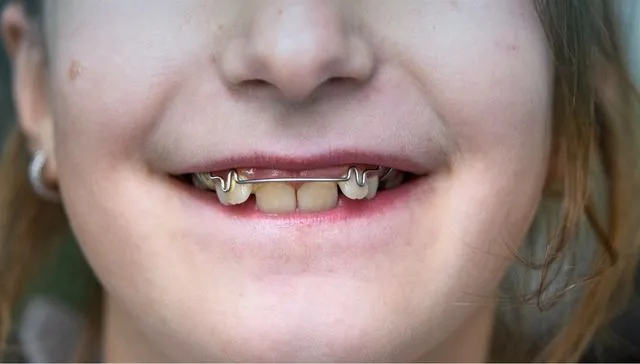
- Removable Plates and other Appliances: For younger children, removable appliances or plates are sometimes recommended. These are devices used by dental professionals to guide jaw growth and tooth positioning before comprehensive brace treatment begins. Early intervention with these appliances can reduce or even eliminate the need for more complex treatment later.
The kind of treatment recommended will depend on your age, the complexity of your case, and your personal preferences. Your orthodontist will explain each option, including what it can and can’t do, so you can make an informed choice.
Approximate treatment timeframes:
| Treatment Type | Typical Duration |
|---|---|
| Traditional metal braces | 18 to 24 months (mild to moderate cases) |
| Ceramic braces | 18 to 24 months |
| Clear aligners | 12 to 18 months (mild to moderate cases) |
| Removable plates (children) | Varies, often 6 to 12 months |
Treatment usually takes about 1 to 3 years, and you will need to see your orthodontist regularly for check-ups. These figures give you a general guide to help set realistic expectations. Your orthodontist will give you an accurate timeline based on your specific case.
Orthodontic Treatment and Oral Health: Why It Matters Beyond Your Smile
A lot of people think orthodontic treatment is purely cosmetic. In reality, orthodontic treatment can help improve your oral health in some pretty significant ways.
- Correcting bite problems reduces uneven wear on your teeth, which can cause chips, cracks, and jaw pain over time.
- Proper jaw alignment can ease problems with chewing, speaking, and even breathing in some cases.
- Good oral hygiene habits, including brushing and flossing, are much more effective when your teeth are properly aligned.
- Straighter teeth are easier to clean. Crooked teeth and tight overlaps create spaces that are harder to reach with a toothbrush, increasing the risk of gum disease and tooth decay.
Over half of Australians (55%) feel self-conscious about their teeth, and almost two-thirds (62%) would like to do something to fix their crooked smiles: The benefits of orthodontic treatment go well beyond a beautiful smile.
Costs and Payment Plans: What to Expect
Let’s talk about the financial side, because it’s one of the main things people want to understand before leaving that first appointment. At Michael Woods Orthodontics, the aim is for every Armadale patient to leave with a clear understanding of the costs involved.
Here’s what to keep in mind:
- Treatment fees vary depending on the type and complexity of your case: Orthodontic treatment can range depending on whether you’re having simple alignment correction or more involved jaw and bite work.
- Private health insurance: If you have a private health insurance policy with extras cover that includes orthodontics, some of your costs may be rebated. Check your specific level of cover with your fund before your appointment. It’s also worth knowing that orthodontic treatment is not covered by Medicare. It can be expensive to have orthodontic treatment as the costs aren’t covered by Medicare, so it’s worth asking about costs when you book an appointment.
- Payment Plans: Many orthodontic practices offer payment plans to spread the cost of treatment over the treatment period. At Michael Woods Orthodontics, flexible payment plans are available to help make orthodontic care accessible.
- What’s included in the Fee: Always ask what your quoted fee covers. This typically includes all adjustment appointments throughout your orthodontic treatment, and retainers at the end.
You should never leave a consultation without a clear understanding of the costs involved. A good orthodontic team will give you all of this information up front.
Questions to Ask at Your First Orthodontic Consultation in Armadale
Walking in with questions prepared means you get more out of that first appointment. Here’s a practical list to take along:
- Am I a suitable candidate for orthodontic treatment?
- What orthodontic treatment options are available for my case?
- What kind of treatment would you recommend, and why?
- How long will orthodontic treatment take?
- What is included in the quoted fee?
- What payment plans are available?
- How often will I need to come in for appointments throughout my orthodontic journey?
- Do I need to see my dentist before treatment starts?
- What happens on the day your braces are removed, or when your final aligner tray is finished?
- Is early intervention relevant for my child’s case?
Why Choose a Specialist Orthodontist in Melbourne?
Seeing a specialist orthodontist is different from seeing a general dentist who offers orthodontic services. Specialist orthodontists have completed a full dental degree followed by an additional three years of full-time university training specifically in orthodontics. They spend their entire clinical career treating orthodontic issues, which means a significantly deeper level of expertise in treatment planning and outcomes.
In Melbourne, specialist orthodontists are registered with the Dental Board of Australia and must meet specific training and registration requirements. Michael Woods Orthodontics is a specialist practice, which means you’re in the hands of an experienced dentist who has dedicated their career to this area of dental care.
Whether you need braces treatment, are considering clear aligners, or are looking into early intervention options for a child, a specialist orthodontist gives you access to the full range of orthodontic treatment options and the expertise to know which one suits your situation.
Getting Here: Orthodontic Care Close to Armadale Shopping Centre
Michael Woods Orthodontics is conveniently located for Armadale residents. The practice is accessible by both train station and bus stops in the area, making it easy to get to appointments, whether you’re coming from the inner suburbs or further afield in Melbourne.
Ready to Take the First Step Towards a Straighter Smile?
If you’ve been putting off that first appointment, this is your sign to go ahead and book it. The first orthodontic consultation in Armadale is genuinely informative, low-pressure, and gives you everything you need to make a confident decision about your dental health. Our friendly team at Michael Woods Orthodontics is ready to help you understand your options and get the smile you’ve always wanted.
Book your consultation today or call us to speak with our friendly team. Armadale patients of all ages are welcome, and no referral is needed.
Frequently Asked Questions
Will I get braces put on at my first consultation?
No. The first visit is purely an assessment. Braces are not put on at the first appointment, as there are still steps to complete, including X-rays and examination, before a treatment plan is confirmed.
How long does the initial consultation take?
Most first appointments run between 30 and 60 minutes, depending on how complex your case is and how many questions you have.
Do I need a referral to see an orthodontist in Melbourne?
No referral is needed. You can book directly with Michael Woods Orthodontics.
Is orthodontic treatment covered by Medicare or private health insurance?
Medicare does not cover orthodontic treatment. Private health insurance with orthodontic extras cover may provide a partial rebate, so check your policy details before attending.
At what age should children have their first orthodontic consultation?
Early orthodontic evaluations typically begin at age seven, allowing orthodontists to monitor growth and intervene early if needed. That said, treatment can begin at virtually any age, and adults are absolutely welcome.

Leave a Reply