

Can Invisalign Fix Severe Crowding or Do You Need Braces?
If you’ve been searching for Invisalign Armadale options and wondering whether aligners can actually fix crowded teeth, you’re not alone. It’s one of the most common questions we hear at Michael Woods Orthodontics. Adults and teens alike want a discreet solution, but crowded teeth vary a lot in severity, and not every case suits the same treatment.
This guide breaks down what severe crowding really means, when Invisalign works well, when braces may be the better call, and how to figure out which treatment is right for your smile.
What Counts as Severe Teeth Crowding? Understanding the Causes of Crowded Teeth
Teeth crowding happens when there simply isn’t enough room in the jaw for all your teeth to sit straight. They overlap, rotate, or push forward and backward, trying to find space. According to research published in PMC, the global prevalence of dental crowding has increased to almost 30–60%, with genetics and jaw size being the leading causes.
Crowded teeth are categorised by severity:
- Mild crowding: One or two teeth slightly out of position, overlap of around 1–3mm.
- Moderate crowding: Several teeth overlapping, overlap of 3–5mm. Most visible in the front teeth.
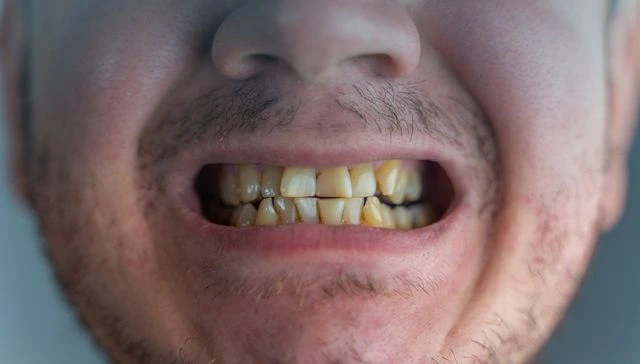
- Severe crowding: Significant overlap above 5mm. Teeth may be rotated, stacked, or pushed completely out of the arch. This can also affect how your upper and lower teeth meet when you bite.
Crowding can also affect your gum health. When teeth are packed together, it becomes hard to clean your teeth properly in between them. Plaque builds up in those tight spots, increasing the risk of decay and gum disease over time. Research from the Australian Institute of Health and Welfare (2024) notes that around 29% of Australian adults experience gum issues, with poor oral hygiene being a key contributing factor.
Other things that cause crowded teeth include:
- Baby teeth falling out too early or too late, leaving adult teeth may shift into the available gaps
- Jaw size that is smaller than the teeth require
- Extra or missing teeth creating spacing imbalances
- Habits such as thumb sucking or prolonged dummy use in childhood
Aproximately 30% of Australian children aged 12–14 have severe or handicapping malocclusions, making crowding one of the most common orthodontic issues seen across Melbourne and the rest of the country.
When Invisalign Can Successfully Treat Crowding: How Invisalign Works for Crowded Teeth
Here is the good news for many patients: Invisalign works to correct a wide range of crowding cases, including some that are more complex than you might expect.
Invisalign aligners are removable, custom-made clear trays that gradually shift your teeth into the desired position over a series of stages. Each set of aligners moves your teeth a small amount, and you progress through the sets over your treatment time. Because Invisalign aligners are removable, you take them out to eat, drink anything other than water, and clean your teeth. This makes it far easier to maintain good oral hygiene compared to fixed braces.
Invisalign is generally well-suited for:
- Mild crowding, where teeth need minor repositioning
- Mild to moderate cases involving overlapping front teeth
- Moderate crowding in adults with good compliance
- Cases where crowding is combined with spacing issues
- Patients who prefer Invisalign due to lifestyle or aesthetic preferences, particularly adults in professional settings
One of the key advantages of Invisalign is that the aligners work using 3D digital treatment planning. An experienced Invisalign doctor will take a digital scan of your teeth, and the software maps out how each tooth needs to move over the course of treatment. You can actually see a preview of your expected result before you start.
It is also worth noting that Invisalign technology has continued to advance, and choosing Invisalign for crowded teeth today is a very different experience compared to even five years ago. Treatment planning is more precise, which means fewer refinements and better predictability.
A cross-sectional study published in PMC (2024) found that Invisalign was the most widely used clear aligner system among Australian dental providers, reflecting how established it has become as a treatment option here in Melbourne and nationally.
What to expect during Invisalign treatment:
| Stage | What Happens |
|---|---|
| Initial Consultation | Digital scan, clinical assessment, treatment planning |
| Aligner Fabrication | Custom aligners made from your scan |
| Active Treatment | New aligners every 1–2 weeks, worn 20–22 hours per day |
| Progress Reviews | Regular check-ins every 6–8 weeks |
| Refinements (if needed) | Additional aligners to fine-tune tooth position |
| Retention | Clear retainers to hold your result |
Treatment time for mild to moderate cases typically ranges from six to eighteen months, though more complex cases may take longer.
Cases Where Braces May Produce Better Results: Traditional Braces for Crowded Teeth
Invisalign is genuinely impressive, but it does have limits. There are severe cases of crowded teeth where traditional braces, including metal braces or ceramic braces, offer more predictable and precise results. Understanding these limitations is just as important as knowing what Invisalign can fix.
Braces are often recommended when:
- Crowding is classified as severe, with significant rotation or displacement of multiple teeth
- Teeth and jaw alignment issues require complex three-dimensional tooth movement
- Extraction of teeth is needed to create space, requiring careful control of how the remaining teeth move into the gap
- Significant bite correction is required alongside crowding treatment
- The patient is younger and still has some jaw growth occurring
- There are orthodontic issues involving both arches that need simultaneous coordination
According to the Australian survey of clear aligner use published in PMC, around 73% of Australian dental providers reported not feeling comfortable treating severe crowding with clear aligners alone, highlighting that referral to a specialist orthodontist for complex cases is the appropriate pathway.
As noted in the Michael Woods Orthodontics orthodontic treatment options article, braces remain the most reliable treatment for severe cases, particularly where significant tooth movement and bite correction are required together.
This does not mean braces are the inferior option. Compared to traditional braces, Invisalign and traditional braces each have genuine strengths depending on the clinical picture. Braces work continuously, twenty-four hours a day, which gives the orthodontist more consistent control over complex movements. Metal braces are also typically more cost-effective for severe cases requiring longer treatment times.
Invisalign vs Braces: A Quick Comparison
| Factor | Invisalign | Traditional Braces |
|---|---|---|
| Visibility | Nearly invisible | Visible brackets and wires |
| Removable | Yes | No |
| Oral hygiene | Easier to clean your teeth | Requires more care around brackets |
| Severe crowding | Suitable for some severe cases | Preferred for complex severe cases |
| Treatment time | Varies by case | Typically 18–30 months for severe crowding |
| Compliance required | High (22 hours/day wear) | Built into the appliance |
| Bite correction | Can address many bite issues | Excellent for complex bite work |
For patients considering braces or Invisalign, the decision really comes down to the clinical complexity of your case and your personal priorities. Both are effective orthodontic treatment options when matched to the right situation.
Which Treatment Is Right for Your Smile? How to Determine If Invisalign Is Suitable for You
The only real way to determine if Invisalign is right for you, or whether traditional braces for crowded teeth will serve you better, is a proper clinical assessment by a specialist orthodontist.
At Michael Woods Orthodontics in Armadale, Professor Michael Woods and Dr Nevenka Tadic both hold specialist orthodontic qualifications. Professor Woods has been treating orthodontic patients in Melbourne for over 35 years, and the practice is equipped to assess and plan treatment for cases ranging from mild to severe. As noted on the Orthodontics Australia website (2024), around 62% of Australian adults are currently considering orthodontic treatment to improve their smile, and choosing the right provider makes a significant difference in the outcome.
What your consultation will cover:
- A full clinical examination of your teeth and jaw
- Digital scan of your teeth and assessment of bite
- Discussion of your goals and lifestyle preferences
- A recommendation for the most clinically appropriate treatment
- An outline of expected treatment time and what to expect during treatment
The practice is located at 549 Dandenong Road, Malvern, easily accessible for patients across Armadale, Toorak, Glen Iris, Malvern, Hawthorn, and the broader inner-southeast Melbourne area.
Whether you are leaning toward choosing Invisalign or want to explore all your options, the most important step is getting that first scan of your teeth and assessment done. No referral is needed.
Can Invisalign fix severe crowding?
Yes, Invisalign can fix severe crowding in some cases, but it depends on the complexity. A specialist orthodontist will assess your specific situation and let you know whether Invisalign or braces is the better option.
How long does Invisalign take for crowded teeth?
Treatment time varies. Mild cases can take six to twelve months. Severe crowding treated with Invisalign typically requires eighteen to twenty-four months, sometimes with refinement phases.
Is Invisalign better than braces for crowded teeth?
Neither is universally better. Invisalign offers discretion and easier oral hygiene. Braces offer more precise control for complex cases. Your orthodontist will recommend what suits your crowding severity and dental goals.
Does Invisalign fix overbite issues as well as crowding?
Yes. Invisalign can fix overbite and crowding in many cases. This is assessed during your initial consultation.
What happens if crowded teeth are left untreated?
Crowded teeth can lead to increased decay and gum disease risk, difficulty cleaning properly, jaw pain, and bite problems. Early treatment is always easier and less involved than treating the same issues after years of progression.
Leave a Reply