

Early Orthodontic Treatment for Children in Armadale: Why Ages 7–10 Can Change Everything
There’s a common belief that orthodontic treatment is a teenage thing. You wait until all the adult teeth come through, then you see an orthodontist. Simple enough, right?
Not exactly. That thinking is outdated, and for some children, waiting too long can actually make things harder to fix.
The Australian Society of Orthodontists recommends that children between the ages of 3 and 10 visit a registered specialist orthodontist for an assessment. For many families in Armadale and across Melbourne, this comes as a surprise. But there’s solid clinical reasoning behind it, and understanding what early interceptive orthodontics actually involves can help you make a much more informed decision for your child.
What Is Early Interceptive Orthodontics?
Interceptive orthodontics, sometimes called Phase 1 orthodontic treatment, is a targeted approach to addressing specific developmental problems while a child’s jaw is still growing.
It’s not about putting every seven-year-old in a full set of braces. Not every child needs active treatment at this stage. What every child does benefit from, though, is an early assessment by a specialist orthodontist so that any developing issues can be identified and monitored before they become more complex.
Think of it like this: catching a problem early gives you options. Waiting until growth is complete often narrows those options considerably.
There are three possible outcomes from an early assessment:
- No treatment needed now. Everything is developing normally, and the child is placed on a monitoring programme with regular check-ins.
- Active treatment recommended. A specific problem is present that will respond better to treatment now than later.
- Watch and wait. An issue is identified, but timing and further growth are factored into the treatment planning process before any action is taken.
Why Ages 7–10 Matter for Dental Development
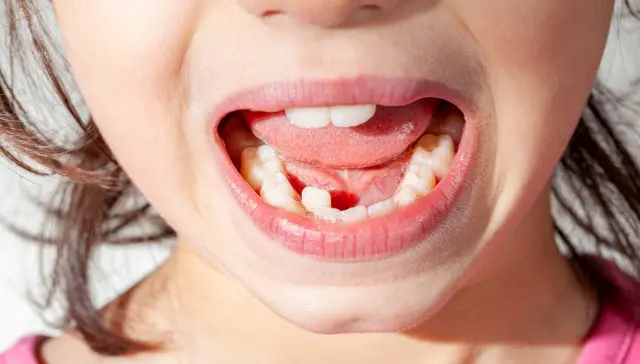
By around age 7, most children have a mix of baby teeth and adult teeth. This is exactly the window that specialist orthodontists look for.
Early examination of the teeth and jaws allows orthodontists to detect, evaluate problems, and plan the best treatment. The primary aim is to minimise the risk of potentially irreversible changes to teeth and jaws.
Here’s why this particular age range matters so much for orthodontic treatment in children:
- The jaw is still growing and responding to guidance
- Certain problems, like a narrow upper arch or a crossbite, are far more manageable during this window
- Once jaw growth stops, some corrections that could have been achieved with simple appliances may instead require surgery
In Australia, the prevalence of severe and handicapping malocclusions is approximately 30% in the 12 to 14-year-old population. Many of these cases could have been identified, and in some instances simplified, with an earlier assessment.
In Melbourne, where specialist orthodontic care is highly accessible, there really is no reason to wait until a problem has fully developed.
What Problems Can Early Orthodontic Treatment Help With?
Orthodontic Issue | Why Early Intervention Helps |
Crossbite | Prevents jaw asymmetry and uneven facial development |
Narrow upper arch | Palate expansion is most effective in growing children |
Severe crowding | Space management can prevent teeth from becoming impacted |
Protruding upper teeth | Reduces the risk of trauma and dental injury |
Underbite tendencies | Can modify jaw growth direction before it becomes fixed |
Scientific evidence suggests that posterior crossbites, mild to moderate Class III, as well as certain Class II malocclusions, open bites, and arch length discrepancies can benefit from simple, efficient interceptive therapy. Early interceptive orthodontic treatment with simple appliances can help to either reduce the complexity or even avoid the necessity of more complex procedures during puberty.
Oral habits also play a role in jaw development. Mouth breathing, thumb sucking, and tongue thrusting can all affect how the dental arches form. A specialist orthodontist is trained to spot the signs of these habits early, which is something a general dentist may not always focus on during a routine check-up.
What Does Early Orthodontic Treatment Look Like for Kids in Melbourne?
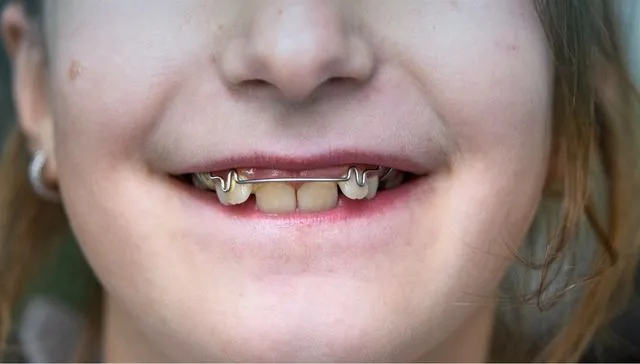
Early treatment does not always mean braces. In fact, for most children in this age group, the most common approach involves removable plates or fixed expanders.
Common early treatment options include:
- Removable plates – The most widely used appliance for Phase 1 treatment. They are worn for a set number of hours each day and are taken out for eating and cleaning. Compliance matters a lot with these.
- Fixed palate expanders – Used for children with a narrow upper arch. They work gradually to widen the upper jaw, creating space for adult teeth and improving bite alignment. This is an area where the dental practice’s experience really counts.
- Partial braces – In some cases, a limited number of braces are placed on key teeth to address specific positioning issues.
- Monitoring without treatment – Sometimes the right call is to watch and wait, with regular dental check-ups to track how things are developing.
It’s worth being clear with parents: early treatment addresses specific developmental problems, not overall tooth alignment. That’s the job of Phase 2 treatment, which typically happens in the teenage years. Some children who have Phase 1 treatment still need full braces later, though the treatment is often shorter and less involved.
Early Orthodontic Treatment: Realistic Expectations for Parents
One of the most important things any orthodontist can do is set honest expectations. Here’s what early treatment can and cannot do:
What it can do:
- Correct jaw growth problems while the jaw is still responsive
- Reduce the risk of impacted teeth
- Lower the likelihood of needing extractions later on
- Address aesthetic concerns that affect a child’s confidence
- Reduce the complexity of any Phase 2 treatment that follows
What it cannot guarantee:
- That your child will not need full braces later on
- Perfect alignment of all adult teeth (those aren’t even through yet)
- Results without the child’s cooperation with wearing appliances
Outcomes depend heavily on the child following through with their appliance wear. This is a real factor in clinical practice, and one worth talking through with your orthodontist before committing to treatment.
Signs Your Armadale Child May Benefit from an Early Assessment
You do not need to wait for a dentist referral to book an orthodontic assessment. The Australian Society of Orthodontists recommends that the first orthodontic assessment should happen by age 7, as this early visit allows orthodontists to identify any developmental issues with the jaw or teeth alignment during the early mixed dentition phase.
Look out for these signs in your child:
- Crowded or overlapping baby teeth
- A crossbite (upper teeth biting inside the lower teeth)
- Protruding or prominent upper teeth
- Persistent mouth breathing or snoring
- Difficulty chewing or biting
- Thumb or finger sucking habits past age 5
- A jaw that shifts when opening or closing
- Speech difficulties or a lisp
- Early or late loss of baby teeth
None of these signs automatically means your child needs treatment right now. But they are good reasons to book an assessment and get a professional view.
In Melbourne and the surrounding suburbs, specialist orthodontic assessment is available for children from age 7. At Michael Woods Orthodontics in Armadale, we approach every child’s assessment as a no-pressure conversation with parents. There is no obligation, and no treatment is recommended unless there is a genuine clinical reason for it.
A Quick Comparison: Early Assessment vs. Waiting
Treatment Factors | Early Assessment (Age 7–10) | Waiting Until Teenage Years |
Jaw still growing? | Yes, highly responsive | Growth is slowing or complete |
Is palate expansion possible? | Yes, non-surgically | May require surgery |
Crossbite correction | Often simpler | More complex |
Impacted teeth risk | Can be prevented | May already be occurring |
Braces still needed later? | Possibly, but often shorter | Usually still required |
Book a Developmental Assessment for Your Child in Armadale
If your child is between 7 and 10 and you have any questions about how their teeth or jaw are developing, an early assessment is the most sensible next step. It gives you information, not obligation.
At Michael Woods Orthodontics, based in Armadale and serving families across Melbourne, our approach to paediatric dentistry and early orthodontic care is built around what’s right for each child. We look at the whole picture and give you honest, clinical advice.
Booking an assessment for your child does not mean signing up for treatment. It means you’ll know exactly where things stand and what, if anything, to watch out for as they grow.
Frequently Asked Questions
At what age should my child have their first orthodontic assessment?
The Australian Society of Orthodontists recommends children have their first orthodontic assessment between the ages of 7 and 10. This is when enough adult teeth are present for a specialist to assess jaw and bite development properly.
Does my child need to see a dentist first before seeing an orthodontist?
No. You can book directly with a specialist orthodontist without a GP or dentist referral. Early assessment at age 7 is a proactive step, not a reactive one.
Will early orthodontic treatment mean my child definitely avoids braces later?
Not necessarily. Early interceptive orthodontics addresses specific developmental problems. Full braces in the teenage years may still be needed, but treatment is often shorter and less complex as a result of early work.
What are the most common early orthodontic appliances for children?
Removable plates are the most common. Fixed palate expanders are used for narrow upper arches. In some cases, partial braces are placed on specific teeth. Your orthodontist will recommend what suits your child's situation.
How long does Phase 1 early orthodontic treatment typically last?
Phase 1 treatment generally runs for 6 to 18 months, depending on the issue being addressed. After that, a monitoring period follows until the child is ready for any Phase 2 treatment if required.
Leave a Reply