


What Are Removable Plates, and Does Your Child Need One? A Parent’s Guide for Armadale Families
If you’ve noticed your child’s teeth or jaw developing in a way that seems a bit off, you’re not alone. It’s one of the most common concerns we hear from parents across Armadale, Toorak, Malvern, and South Yarra. And one of the first questions that comes up is: “Should we be doing something about this now, before all the adult teeth come through?”
Removable plates are often part of that early answer. But there’s also a lot of confusion around what they actually are, what they can fix, and whether every child who sees a specialist will walk out needing one.
This guide is here to help you understand all of that, so you can go into any consultation at Michael Woods Orthodontics feeling informed and confident.
Your Armadale Guide to Removable Orthodontic Plates: What They Are and How They Work
A removable orthodontic plate is a custom-made appliance, typically built from acrylic (hard plastic) with wires and sometimes small springs. It fits around either the top or bottom teeth, using those wires and springs to push teeth into a better position or to hold them in place while other adult teeth come through.
Unlike fixed braces, your child can take a removable plate out. That means it comes out for eating, brushing, and cleaning. The plate goes back in during school, at home, and crucially, at night.
Orthodontists use orthodontic plates to hold teeth in position or gradually move teeth into more appropriate positions.
Here’s a quick comparison to help you understand where plates sit in the orthodontic picture:
Feature | Removable Plate | Fixed Braces |
Can be removed | Yes | No |
Best age range | 6 to 12 (mixed dentition) | Typically 12 and up |
Main purpose | Guide jaw and tooth development | Align individual teeth |
Compliance required | High (wear consistently) | Built in |
Used as the first step | Often yes | Sometimes yes |
What Problems Can Removable Plates Help Correct?
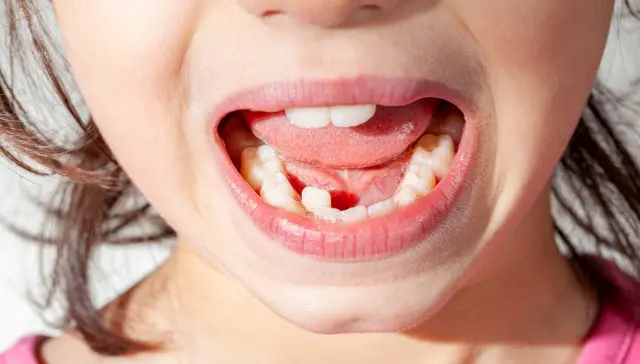
Plates are not a one-size-fits-all solution. They work best for specific situations, particularly during the years when the jaw is still growing, and the baby teeth and adult teeth are both present (known as the mixed dentition phase).
Common situations where a removable plate may help include:
- Crossbites: Where the upper and lower teeth don’t line up properly side to side
- Narrow upper arches: Where there isn’t enough room for adult teeth to come through in a good position
- Mild crowding: Early space management when teeth are a little bunched or overlapping
- Oral habits: Thumb-sucking or tongue-thrusting that is actively reshaping how the jaw grows
- Early tooth loss: If a baby tooth is lost too soon, a plate can help hold the space open so the adult tooth has somewhere to go
Removable appliances can correct specific tooth movements or gently discourage habits like thumb-sucking and tongue-thrusting. These custom-designed devices are typically worn for a few months and are a great way to intercept developing issues without full braces.
It is worth noting that plates work best for moderate, targeted issues. They are not a replacement for comprehensive orthodontic treatment in more complex cases. A specialist assessment is the only way to know which category your child falls into.
At What Age Are Removable Plates Used? What Melbourne Families Should Know
This is the question we get asked most often. The short answer is generally between ages 6 and 12, during the mixed dentition phase.
Research has shown that certain malocclusions can benefit from early intervention, and early treatment can help to either reduce the duration or even avoid the necessity of a more substantial and more expensive treatment at a later stage.
According to Australian orthodontic research, pre-adolescents who accessed orthodontic services were predominantly treated using removable appliances, accounting for 25.1% of cases, that gives you a sense of how commonly plates come into the picture for younger children across Australia, including here in Melbourne.
Key ages to know:
- Age 6 to 7: First adult molars come through; a good time for an initial specialist assessment if you’ve noticed something
- Age 8 to 10: The most common window for plate treatment when issues are identified early
- Age 11 to 12: Still within range, though options may shift depending on jaw development
One important thing to understand: not every child needs early treatment. Early interceptive orthodontics can eliminate or simplify orthodontic treatment in the teen years and may even prevent the need for tooth extraction. Pure Orthodontics. But for many children, the best plan is simply to monitor and wait for the right time.
How Do Removable Plates Work? The Function Behind the Fit
A removable plate works by applying a gentle, controlled force to specific teeth or areas of the jaw. Over time, that consistent pressure guides development in a more favourable direction.
The keyword here is consistent. A typical guideline for a removable orthodontic plate is to wear it full-time for 6 to 9 months, except when eating or during cleanings.
For Armadale parents, here are some practical tips to help your child stay on track:
- Build it into the routine: Plate goes in after breakfast and comes out only for meals
- Use a case: Always keep the plate in its case when it’s out, never wrapped in a tissue
- Night wear matters: After several months and approval from the orthodontist, it may be possible to cut back to wearing the plate only at night.
- Make it normal: Children who treat the plate as a normal part of their day do much better than those who feel singled out
The plate itself is custom-made to fit your child’s mouth exactly, so comfort improves quickly. Orthodontic plates are not painful, but you can expect to feel some discomfort during the first few days, and a mild pressure or tightness as teeth start to shift.
Removable Plates vs Braces: How Are They Different?
This is a really common point of confusion for Melbourne families, so it helps to be clear.
Removable plates and braces serve different functions. They are not interchangeable, and most of the time, plates come first.
Braces are often a better option even for young patients, as they can generally fix problems much more efficiently and straighten all types of crooked teeth. But that does not make plates less valuable. They shape the foundation before the more detailed alignment work begins.
Here is the best way to think about it:
- Plates manage growth: They guide the jaw and create the right environment for adult teeth
- Braces align teeth: They move individual teeth into their final, ideal positions
While plates are usually used to make smaller corrections, they are sometimes used early as a first phase of treatment. Braces are still generally required in a second phase of treatment during the teenage years to cosmetically align the teeth and establish a perfect bite, but an initial treatment during primary school can help prevent the need for more extreme tooth movements in the second phase.
So if a specialist recommends a plate for your child, it does not necessarily mean braces are off the table later. It often means that when braces do come, the work will be simpler, shorter, and more effective.
What to Expect from a Consultation at Michael Woods Orthodontics
Professor Michael Woods has practised specialist orthodontics for children and adults in Malvern and Armadale for 25 years. The practice is built around personal, specialist-led care, not a conveyor belt approach.
When you bring your child in for an early assessment, here is what the process looks like:
- Clinical examination: The specialist will assess jaw development, how the teeth are coming through, and how the bite is forming
- X-rays and records: Depending on age and presentation, X-rays may be taken to see what is happening beneath the surface, including adult teeth that have not yet erupted
- Assessment of habits: Tongue-thrusting, thumb-sucking, and mouth breathing are all noted, as these can directly influence jaw shape
- Treatment planning discussion: You will receive a clear, honest explanation of what has been found and what options are appropriate for your child’s specific situation
One thing parents often appreciate: an early assessment does not always lead to immediate treatment. Sometimes the right advice is to come back in six months for a review. That kind of honest, conservative approach is exactly what a modern specialist orthodontic practice in Melbourne should offer.
Quick Reference: Is My Child a Candidate for a Removable Plate?
Signs to Watch For | What It Might Mean |
Top teeth sit inside bottom teeth | Possible crossbite; worth assessing |
Very crowded baby teeth | Limited space for adult teeth to develop |
Thumb-sucking past age 5 | May affect jaw shape over time |
Noticeable jaw shift when biting | Could indicate a functional crossbite |
Baby tooth lost early (before expected) | Space management may be needed |
The top front teeth protrude noticeably | Early intervention may reduce severity |
If any of these sound familiar, an assessment with a Melbourne specialist is a sensible next step, not a commitment to treatment.
Book an Early Assessment for Your Child
The Armadale and Melbourne communities we serve include families from Toorak, Malvern, South Yarra, and beyond. If you have noticed something that does not look quite right with your child’s teeth or jaw, the best thing you can do is get a specialist’s eyes on it early.
An early assessment does not mean your child will walk out with a plate that same day. It means you will have the information you need to make the best decisions for their development, whatever that looks like.
Book a consultation with Michael Woods Orthodontics today and take the guesswork out of your child’s orthodontic care.
Frequently Asked Questions
How long does my child need to wear the plate each day?
Most plates need to be worn for the majority of the day, only coming out for meals and teeth cleaning. Consistent wear is what produces results.
Will a removable plate replace the need for braces later?
Not always. Plates guide early development, but many children still benefit from braces in their teens to finalise tooth alignment.
What happens if my child keeps losing or forgetting the plate?
Compliance is central to how well plates work. Your specialist can discuss strategies to help, and in some cases, a fixed alternative may be more appropriate.
Is there any pain involved with wearing a removable plate?
There may be mild pressure or tightness in the first few days as the teeth begin to respond. This usually settles quickly and is quite different to the discomfort sometimes associated with braces.
Can my child play sports while wearing a plate?
For most sports, yes. Contact sports are the exception, where the plate should be removed and a mouthguard worn instead. Your orthodontist will give you specific guidance based on your child's plate and the sports they play.
Leave a Reply