

Class III with Large Lower Jaw: Surgical vs Non-Surgical Treatment Options for Armadale Patients
If you’ve been told you have a significant skeletal Class III jaw relationship, chances are your first question was: do I definitely need surgery? It’s one of the most common things patients: and parents: ask when they first hear the diagnosis. And honestly, it’s a fair question. The short answer is: not always, but sometimes yes.
This article is for Armadale patients who want the full picture. We’ll walk you through what causes this condition, what both surgical and non-surgical treatment paths look like, and how you make that decision with the right expert in your corner.
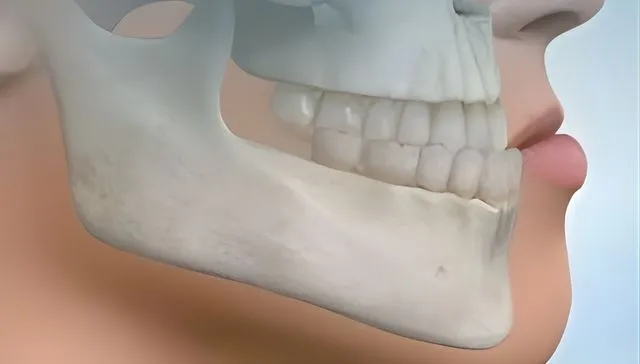
Understanding the Condition: Class III Malocclusion, Large Lower Jaw + Underdeveloped Upper Jaw
A skeletal Class III malocclusion isn’t a one-size-fits-all diagnosis. It can develop from three different causes:
- Mandibular prognathism: the lower jaw (mandible) has grown too large
- Maxillary hypoplasia: the upper jaw (maxilla) hasn’t developed enough
- Both at the same time: which creates the most significant facial and bite discrepancy
When both issues are present together, patients typically present with lower front teeth sitting in front of the upper teeth (negative overjet), a noticeably concave facial profile, and real difficulty chewing properly. This is a true skeletal jaw condition: not just a dental alignment issue.
Malocclusion ranks as the third most prevalent oral health concern globally, and research published in PMC puts the mean global prevalence of Class III malocclusion at around 6.5% across the population. While Class III malocclusions are less common than Class I or Class II, they tend to be more complex to treat, particularly in adults.
How Severity Is Assessed: Diagnosis and Treatment Planning
Not every Class III jaw case needs the same treatment plan. That’s why accurate diagnosis matters so much before any orthodontic treatment is considered.
Professor Michael Woods uses state-of-the-art imaging to assess each patient’s skeletal pattern properly. This includes:
- Lateral cephalometric analysis: skull X-rays that allow precise measurement of the skeletal discrepancy, including the ANB angle (the angular difference between the upper and lower jaw positions)
- 3D imaging: for a comprehensive view of the jaw relationship, midline, and mandibular plane angle
The cephalometric assessment is what really drives the treatment decision. A mild ANB discrepancy might be manageable without surgery. A larger skeletal discrepancy, particularly beyond 5mm, is where orthognathic surgery often becomes the most realistic path to a stable, functional result.
Non-Surgical Treatment Pathway
Dental Compensation (Orthodontic Camouflage Treatment)
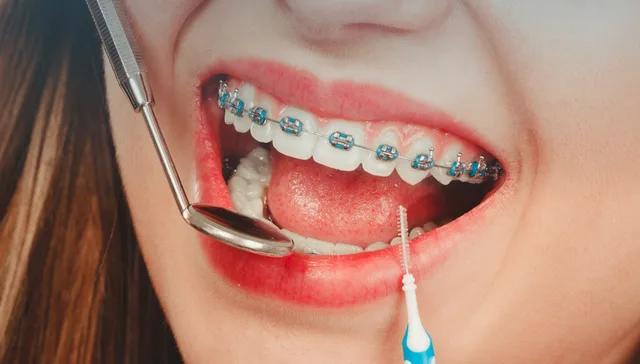
For mild to moderate skeletal Class III cases, it’s sometimes possible to manage the condition through orthodontic camouflage treatment: essentially using braces to move the teeth in a way that compensates for the underlying jaw relationship.
In practice, this means:
- Maxillary incisors are tipped (proclined) forward
- Mandibular incisors are tipped (retroclined) back
- The goal is to establish a positive overjet and a functional molar relationship without operating on the jaws
This approach can genuinely improve bite function and aesthetics for the right patient. It doesn’t correct the underlying skeletal jaw discrepancy, but for mild cases, or for patients who aren’t surgical candidates, it can produce good, stable results.
As research in Progress in Orthodontics notes, camouflage is best suited to borderline Class III cases where the skeletal discrepancy is mild enough that dental compensation alone can achieve a stable occlusion without overstressing the teeth or gums.
Camouflage treatment works best when:
- The skeletal discrepancy is mild to moderate
- The patient is past the growth phase
- The upper and lower arches are in reasonable alignment
- Surgical risks outweigh the benefits for that individual
It’s less suitable when:
- The ANB discrepancy is significant
- Proclination of the maxillary incisors would be excessive
- Retroclination of the mandibular incisors would compromise gum health
- The patient wants the facial profile corrected, not just the bite
Interceptive Orthodontic Treatment During Growth
For children, typically between ages 8 and 12: there’s a window of opportunity that doesn’t exist for adults. This is the ideal time for interceptive orthodontic treatment.
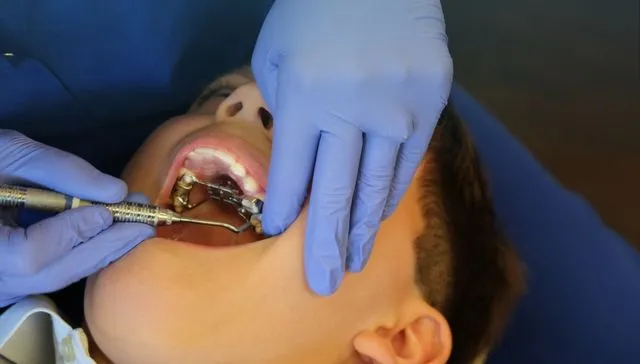
During this growth phase, the jaws are still developing. Tools like reverse pull headgear (a face mask) and upper jaw expanders can stimulate forward development of the maxilla, partially correcting the skeletal relationship before it becomes more severe. Research published in the International Journal of Oral Science (2025) confirms that early orthodontic intervention for Class III malocclusion can harness growth potential to normalise jaw development and reduce the severity of later treatment.
Early treatment won’t always eliminate the need for surgery in adulthood, but it can significantly reduce the degree of correction needed, and in milder cases, it can make non-surgical orthodontic treatment a realistic long-term option.
Surgical Treatment Pathway
Who Needs Surgery?
Adult Class III patients with a significant skeletal discrepancy, where dental compensation alone simply can’t produce a stable, functional bite, are typically the ones who need orthognathic surgery. The benchmark used in diagnosis and treatment planning is often a cephalometric ANB difference greater than 5mm, though every case is assessed individually.
A 2024 case report in ScienceDirect reinforces that for adult skeletal Class III malocclusion, growth modification is no longer possible, meaning orthognathic surgery is often the only route to genuinely correct the underlying jaw discrepancy.
What Is Orthognathic Surgery?
This is the bit that often worries people, but it’s worth understanding what orthognathic surgery actually is and isn’t. It’s not cosmetic surgery. It’s a medically indicated correction of a functional jaw problem.
Performed by an oral and maxillofacial surgeon working closely with your orthodontist, orthognathic surgery repositions one or both jaws. For a combined Class III jaw case (large lower jaw + underdeveloped upper jaw), the typical surgical approach may involve:
- Le Fort I osteotomy: advancement of the maxilla (upper jaw moved forward)
- BSSO (bilateral sagittal split osteotomy): the mandible is repositioned back
- Or a combination of both (bimaxillary surgery)
As noted in research from PMC, bimaxillary surgery tends to offer better long-term stability compared to single-jaw procedures: an important consideration for treatment results over the years ahead.
What Does the Orthodontic Role Involve?
The orthodontist’s role in a surgical case is just as important as the surgeon’s. Treatment typically unfolds in three phases:
- Pre-surgical orthodontics: braces are used to align the upper and lower arches, decompress any dental compensation, and set the teeth into the positions they’ll occupy after jaw surgery. This phase also establishes the correct incisor angulations and canine relationship
- Surgery: performed once the pre-surgical orthodontic objectives are achieved
- Post-surgical orthodontics: fine-tuning the bite, settling the occlusion, and achieving final alignment
Total treatment time is typically 18 to 30 months, including all three phases. An experienced orthodontist will set clear treatment objectives from the start so you know what to expect at each stage.
What About Recovery?
Let’s be straight about this: jaw surgery is a significant procedure with a real recovery period. Most patients need 6 to 8 weeks off work or school following the surgical portion of treatment. Swelling, a soft diet, and some speech changes are part of the early recovery.
That said, modern surgical protocols have come a long way. Most patients report that recovery is more manageable than they expected: and the long-term functional and aesthetic outcomes are genuinely transformative for those who needed it.
How Professor Michael Woods Guides Armadale Patients Through This Decision
Professor Michael Woods has extensive experience in surgical orthodontics: working alongside oral and maxillofacial surgeons to manage complex Class III cases from initial diagnosis through to post-treatment retention.
What sets the consultation process at Michael Woods Orthodontics apart:
- Thorough assessment: using the latest cephalometric and 3D diagnostic technology
- Clear explanation of all options: including both the surgical and non-surgical treatment pathways, with honest discussion of the trade-offs
- Realistic expectations: so patients and families understand exactly what each treatment plan will and won’t achieve
- No pressure: if non-surgical treatment is genuinely viable for your case, that’s what will be recommended
Whether you’re an adult Class III patient weighing up your options, or a parent concerned about a developing Class III condition in your child, the consultation at Michael Woods Orthodontics is designed to give you clarity.
Ready to get a clear picture of where you stand?
Book a consultation with Professor Michael Woods and find out exactly what treatment your jaw needs: surgical or not. No referral required.
Frequently Asked Questions
If my child had early treatment, could surgery have been avoided later?
Possibly. Early interceptive treatment can reduce severity, but won't always eliminate the need for surgery if the underlying skeletal pattern is significant.
Is there a minimum age for jaw surgery?
Yes. Surgery is only done once jaw growth is complete: around 17–18 for females and 18–21 for males.
Does health insurance cover orthognathic surgery in Australia?
Medicare rebates the surgical and anaesthetist fees for functional cases. Private health insurance may cover hospital costs depending on your level of cover. Check with your fund before starting treatment.
What happens if I choose braces-only treatment for a severe case?
It risks an unstable result and can overload the teeth over time. Your orthodontist will be upfront if non-surgical treatment isn't right for your case.
Can a Class III malocclusion get worse if left untreated?
Yes, especially during growth spurts. It won't self-correct. Early assessment means more options available to you.
Leave a Reply