


How Thumb Sucking Affects Your Child’s Teeth and Jaw Development
If your little one sucks their thumb, you are not alone, and you are definitely not a bad parent. Thumb sucking is one of the most natural self-soothing habits a child can have. In fact, babies begin practising the sucking motion in the womb. For most children, it is simply a comfort reflex that fades away on its own.
That said, when the habit persists past a certain age, it can begin to impact how your child’s teeth and jaw develop. The good news is that catching it early makes a real difference.
This guide walks you through what actually happens to your child’s bite, jaw, and palate, when to seek specialist advice, and the habit-breaking strategies that genuinely work, without shame or pressure.
Why Children Suck Their Thumbs
Thumb sucking is a completely normal reflex that starts before birth. It helps babies self-regulate, provides comfort when they are tired, anxious, or bored, and is part of healthy early development.
The habit itself is not the problem. What matters is how long it continues and how vigorously the child sucks. Most children naturally stop sucking their thumbs somewhere between the ages of 2 and 4.
When Does Thumb Sucking Become an Orthodontic Problem?
Here is the key distinction that Armadale parents should know: early thumb sucking is mostly harmless. It is persistent thumb sucking, particularly after permanent teeth start to arrive, that creates real dental concerns.
- Before age 4: The habit rarely causes lasting dental problems. Baby teeth are temporary and the jaws are still very flexible.
- After age 4: The risk of dental changes begins to rise, especially if sucking is vigorous and frequent.
- After age 5 to 6: This is the critical window. When permanent teeth begin to erupt, and a child is still sucking, the forces from the thumb can cause noticeable, lasting changes to the teeth and jaw.
- Intensity matters: A child who sucks gently at naptime is less at risk than one who sucks forcefully for hours every day.
If the thumb sucking habit persists past the age of 5 in your child, it is worth booking a specialist orthodontic assessment. Early consultation does not mean immediate treatment. It simply means getting expert eyes on your child’s development before problems become harder to fix.
You might also find it useful to read our post on Early Interceptive Orthodontics in Armadale: Why Treating Children Between Ages 7 and 10 Can Change Everything.
How Thumb Sucking Affects Teeth and Jaw Development
| Dental effect | What happens | Severity if untreated |
|---|---|---|
| Anterior open bite | Upper and lower front teeth fail to meet when biting | Moderate to high |
| Increased overjet (buck teeth) | Upper front teeth pushed forward, lower teeth pushed back | Moderate |
| Narrow upper jaw and crossbite | The palate narrows from constant pressure, leading to a crossbite | High |
| Tongue-thrust pattern | The tongue pushes forward through the gap when swallowing | Moderate (reinforces open bite) |
Moderate (reinforces open bite)
This is the most common malocclusion linked to thumb sucking. The thumb physically prevents the upper and lower front teeth from meeting properly. Over time, the upper and lower front teeth stop coming together even when the mouth is fully closed, leaving a visible gap. Children can struggle to bite cleanly through foods and may feel self-conscious about their smile.
Increased Overjet (the "Buck Teeth" Appearance)
Pressure from the thumb pushes the upper front teeth forward and the bottom front teeth back. The result is upper teeth that protrude noticeably. This often affects confidence in school-age children, and protruding front teeth are also more vulnerable to accidental chipping or injury during play.
Research confirms that the upper front teeth can tip forward and the lower teeth tip inward, creating gaps and a misaligned bite, typically seen as an overbite or open bite.
Narrow Upper Jaw and Posterior Crossbite
While the thumb occupies space inside the mouth, the cheek muscles press inward against the upper jaw. This combination narrows the palate (the roof of the mouth) over time. A narrow upper jaw often leads to a crossbite, where the upper back teeth sit inside the lower back teeth when biting. This is one of the more serious consequences of prolonged sucking because it can affect long-term jaw growth and facial symmetry.
Tongue-Thrust Pattern
When an open bite develops from thumb sucking, the tongue learns to push forward through the gap during swallowing. This tongue-thrust pattern reinforces the open bite even after the thumb habit stops. It means that simply breaking the habit may not be enough. The tongue can continue applying pressure in the same direction, which is why early orthodontic assessment matters so much for Melbourne families.
Speech, Eating, and Breathing Effects
The effects of prolonged thumb sucking go beyond the appearance of the teeth. Here are some of the less obvious but very real consequences:
- Speech: Open bites can affect the pronunciation of sounds like “s”, “z”, “f”, and “v”, often producing a lisp or difficulty articulating clearly.
- Eating: A child with an open bite may struggle to bite cleanly through firm foods like sandwiches, apples, or carrots.
- Breathing: Habitual mouth breathing often develops alongside thumb sucking. Over time, this can contribute to a longer face shape and altered jaw growth patterns, which specialist orthodontists in Melbourne monitor carefully during assessments.
When Should Armadale Parents Seek Professional Help?
Book a specialist orthodontic consultation if any of the following apply to your child:
- The thumb sucking habit persists past age 5
- You can see changes in your child’s bite, or notice the front teeth beginning to protrude
- Your child has difficulty stopping despite gentle encouragement at home
- There are signs of mouth breathing, snoring, or speech issues
- Your child’s teeth start coming in crooked, or the jaw appears narrow
Australian Society of Orthodontists recommendation: Every child should have their first orthodontic assessment by age 7 to 10, when teeth and jaws are still at a formative stage and easier to guide. Thumb sucking after age 5 is specifically listed as a trigger for seeking an early assessment.
You may also want to read our post on Early Signs of Crowding Every Armadale Parent Should Watch For to understand what to look for at home.
Michael Woods Orthodontics provides paediatric assessments for families across Melbourne, including those in Armadale. No GP referral is required, and an early consultation is simply about gathering information, not committing to any treatment.
Habit-Breaking Strategies That Actually Work
The most important thing to remember when helping your child stop is this: shame and punishment rarely work. Children often suck their thumbs as an emotional response, so adding stress to the situation tends to make the habit worse. Here are the approaches that actually get results.
Positive Reinforcement
Praise your child warmly for thumb-free stretches of time, even short ones. A simple sticker chart works very well for children aged 4 to 7. Celebrate small wins. When you encourage your child to go thumb-free positively, they are far more likely to keep trying. Avoid linking rewards to shame about the habit itself.
Identifying Triggers
Many children suck their thumbs when they are tired, anxious, bored, or watching television. Talk to your child about when they notice themselves doing it. Then help them identify a substitute behaviour, such as holding a soft toy, squeezing a fidget, or holding a parent’s hand. Replacing the behaviour is usually more effective than simply telling a child to stop sucking his or her thumb.
Gentle Physical Reminders
A bandage or a sock on the child’s thumb at bedtime can act as a helpful reminder rather than a punishment. Some older children (with their full understanding and agreement) respond well to bitter-tasting nail polish applied to the thumb. Thumb guards are another option that some families find useful, particularly at night when the habit can continue during sleep without the child being aware.
Habit-Breaking Appliances
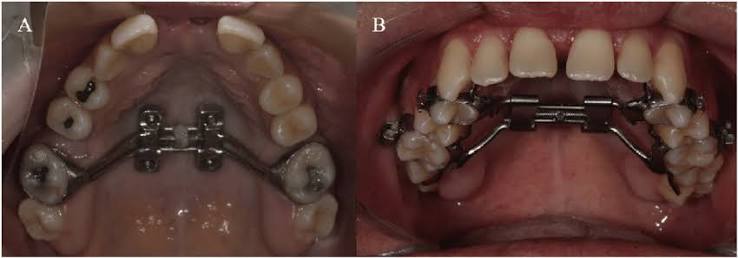
For older children whose thumb-sucking habit has continued despite all other strategies, a custom orthodontic appliance is highly effective. The most common option is a palatal crib or palatal rake, a small device fitted to the upper jaw and palate that physically interrupts the sucking motion without causing distress. It works by making the thumb sucking feel less satisfying, so the habit fades naturally. Breaking the habit with this kind of support is often much faster than parents expect.
Learn more about habit-breaking appliances on our orthodontic appliances page.
Will the Damage Reverse on Its Own?
This is one of the most common questions dentists and orthodontists across Melbourne hear from parents. Here is the honest answer:
- Under age 5 to 6: If your child stops the habit before permanent teeth erupt, mild dental effects often self-correct as the permanent teeth come in and the jaws continue to grow.
- After permanent teeth erupt: Once permanent teeth are in position and the jaw has been shaped by prolonged sucking, orthodontic treatment is usually needed to correct the bite. Lasting dental problems become harder to address in the teenage years, which is why early action matters so much for long-term dental care.
The earlier the habit stops, the simpler future treatment will be.
Why Armadale Families Trust Michael Woods Orthodontics
Families in Armadale and across Melbourne choose Michael Woods Orthodontics because we are registered specialist orthodontists, not general dentists. There is a meaningful difference. Specialist orthodontists complete an additional three years of full-time postgraduate training beyond a general dentistry degree, specifically in the growth, development, and correction of the teeth and jaws.
- Specialist paediatric assessments for early dental concerns, including persistent thumb sucking
- Habit-breaking appliances designed and fitted by registered specialist orthodontists
- Conveniently located in Malvern, approximately 3 km from Armadale, with easy access for Melbourne families
- Warm, child-friendly clinic environment designed to put young patients at ease
- Saturday appointments available for busy Melbourne families
- No GP referral required. You can contact us directly.
Book an Assessment for Your Child Near Armadale
If your child’s thumb sucking has you wondering what to do next, the best step is a relaxed, no-pressure consultation with a specialist orthodontist. Early consultation does not mean immediate treatment. It simply means expert guidance so you know exactly where your child’s development stands.
Phone: (03) 9509 7496 Address: 549 Dandenong Road, Malvern (approximately 3 km from Armadale) Saturday appointments available. No referral required.
Frequently Asked Questions
At what age should my child stop sucking their thumb?
Most children stop naturally between the ages of 2 and 4. If the habit continues past age 5, especially once permanent teeth start to come through, it is worth seeing a specialist orthodontist.
Is a pacifier better than a thumb for my child's teeth?
Both thumb sucking and pacifier use can affect teeth and jaw development if prolonged. Pacifier use is generally considered slightly easier to break because you can simply remove it. Both should ideally stop before age 4 to minimise dental effects.
Can thumb sucking cause permanent damage to my child's teeth?
Yes, if the habit continues after permanent teeth erupt (usually from age 6 onwards), changes to the bite, jaw, and palate often require orthodontic treatment to correct. The earlier the habit stops, the better the chances of self-correction.
Will my child definitely need braces if they sucked their thumb?
Not necessarily. It depends on how long and how vigorously the habit continued, and when it stopped. A specialist assessment is the best way to know what your child actually needs.
Do I need a referral from a dentist or GP to see an orthodontist in Melbourne?
No referral needed at Michael Woods Orthodontics. Call us on (03) 9509 7496 or visit us at 549 Dandenong Road, Malvern.
Leave a Reply