


Deep Overbite Class II Division 2 Malocclusion: What It Is and Why Early Treatment Matters in Armadale
Have you ever noticed that when you bite down, your bottom teeth almost completely disappear? Maybe someone has pointed it out, or perhaps you’ve always just assumed it was normal.
For many people in Armadale and surrounding suburbs, this is actually a specific orthodontic condition with a name, a cause, and a clear treatment pathway.
It’s called a Class II Division 2 malocclusion, and the sooner it’s diagnosed, the more treatment options are available to you. If you’ve been living with jaw discomfort, unusual tooth wear, or a bite that just doesn’t feel right, this article is for you.
Understanding Class II Division 2: The Basics of This Malocclusion
To understand Class II malocclusion, you first need to understand what it means for your jaw relationship. In a Class II molar relationship, the upper jaw sits too far forward relative to the lower jaw. This is the most common type of skeletal and dental jaw discrepancy: around 32% of individuals with malocclusion have a Class II molar relationship, where the mandible is positioned retrognathic to the maxilla. PubMed
Now, within Class II, there are two divisions. In Class II Division 1, the upper front (maxillary anterior) teeth flare outward, creating a large overjet: think of teeth that stick forward noticeably. Division 2 is the opposite. The upper front incisors are tipped inward (what orthodontists call “retroclined”), often overlapping the lower teeth significantly. This creates a deep vertical overbite, where the upper teeth cover a large portion of the lower ones.
This Class II Division 2 malocclusion is often described as a deep bite malocclusion or deep overbite condition, and it behaves very differently from Division 1. The retroclined maxillary anterior teeth and the resulting deep bite mean the jaw is effectively “locked” in a position that creates pressure on the temporomandibular joint and accelerated wear on the lower front teeth.
One useful clinical marker is the curve of spee: the natural curved alignment of the biting surfaces of the teeth. In cases of 2 malocclusions with a deep overbite, the excessive curve of spee is often exaggerated, contributing to the deep vertical overlap. A cephalometric assessment (an X-ray that measures skeletal and dental relationships) is typically used to confirm the diagnosis and guide the treatment plan.
It’s also worth noting that the canine relationship and class II molar relationship are both evaluated during diagnosis, since these affect how the treatment objectives are set and what treatment options will be most appropriate.
Signs and Symptoms to Watch For
A Class II malocclusion often goes undiagnosed for years because many people assume their bite is simply “how they are.” But some telltale signs suggest something more specific is going on, especially in the context of overbite malocclusion with a deep bite component.
Here’s what to look out for:
- Your bottom teeth seem to disappear when you bite down: a hallmark sign of a deep overbite
- The upper front teeth appear large and dominant, covering most or all of the lower front teeth
- Your bottom lip sits behind your upper teeth when your mouth is at rest
- Jaw clicking or discomfort, particularly around the temporomandibular joint (the jaw joint)
- Difficulty biting into food: sandwiches, apples, and crusty bread can be harder to bite through
- Lower front teeth biting into the roof of the mouth (the palate): a sign that the overbite in an adult patient or teenager is severe
- Worn lower anterior teeth, particularly when the deep bite has been present for years
Many Armadale teenagers and adults come to us having experienced some of these symptoms for years without connecting them to a specific dental diagnosis. The symptoms of a class II deep bite condition are not always obvious, but they do tend to worsen over time without treatment.
What Happens If It Is Left Untreated?
This is where it gets important. Without treatment, a Class II malocclusion with a deep overbite doesn’t stay the same: it tends to progress. The consequences of leaving a deep overbite in an adult or teenager unaddressed can include:
- Accelerated tooth wear on the lower front incisors, which bear the brunt of the bite forces
- Gum trauma on the palate, where the lower incisor edges can dig into the soft tissue over time
- Temporomandibular joint (jaw joint) stress, which can cause chronic jaw pain, headaches, and clicking
- Worsening facial profile: the skeletal and dental imbalance can affect the overall balance of the face, particularly the lower third
- Anterior crowding is becoming worse as the restricted bite exerts pressure on the dental arches
It’s also worth understanding that the skeletal component of a Class II Division 2 tends to be well established by the time a person reaches adulthood. Malocclusion is ranked by the WHO as the third most critical oral health concern, affecting between 39% and 93% of adolescents worldwide. Austin Publishing Group, and conditions like ii malocclusion with deep overbite are among those that respond best to early intervention. The younger the patient, the more the orthodontist can work with jaw growth to achieve lasting treatment results.
How Is Class II Division 2 Treated?
The good news is that this class ii malocclusion with deep overbite is very treatable, and there are solid treatment options for class II cases depending on your age, severity, and specific bite presentation. Here’s how specialist orthodontists typically approach it:
Orthodontic Appliances First
For younger patients who are still growing, functional appliances are often the starting point. These appliances work by guiding jaw development: encouraging the lower jaw to grow forward and reducing the depth of the overbite before fixed braces are placed. Using intermaxillary elastics (rubber bands that link the upper and lower teeth) is another tool in the orthodontist’s kit, often used to help correct the bilateral class II jaw relationship over time. Class II elastics and class II intermaxillary elastics are commonly used during the fixed appliance phase to help correct the class ii relationship and achieve a class I molar and canine result by the end of treatment.
In some cases, treatment was performed without extractions and using a combination of appliance therapy and elastics, making it a non-extraction treatment approach. Another treatment option that may be considered when posterior teeth need repositioning is the use of carefully planned orthodontic mechanics to address the class II molar relationship and molar relationship correction as part of the overall treatment plan.
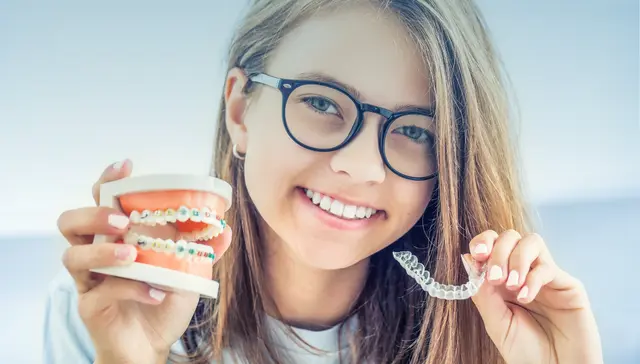
Fixed Braces or Clear Aligners
Once the jaw relationship is managed (or simultaneously in adult patients), fixed braces or clear aligners are used to correct tooth position, level the curve of spee, and open the bite to a healthy level. Orthodontic treatment at this stage focuses on precise tooth movement: bringing the retroclined upper incisors to the correct angle, levelling the posterior teeth, and improving overjet and overbite to within normal ranges.
Metal or ceramic braces are particularly effective for this type of bite correction. Clear aligners like Invisalign can be appropriate in selected cases, but the suitability depends on the severity of the skeletal class component. Your orthodontist will review cephalometric records to determine the ideal treatment pathway and ensure treatment objectives are realistic and achievable.
Treatment plans tailored to each patient are essential: what works for a 13-year-old is very different from what works for a deep overbite in an adult with established bone structure.
Surgical Option for Adult Patients
For severe class II cases in adult patients where the jaw discrepancy is predominantly skeletal, adult orthodontic treatment combined with orthognathic surgery may be the most appropriate path to a truly balanced bite. This is called correcting class ii via a surgical-orthodontic approach, and it involves repositioning the jaws surgically before or after a period of orthodontic treatment with fixed braces.
This is typically discussed with Professor Michael Woods during a consultation, as it requires a thorough assessment of the skeletal and dental structures, including cephalometric X-rays and detailed treatment planning. Treatment of a class II with a significant jaw component via surgery achieves a level of bite alignment and facial change that braces alone cannot accomplish in skeletally mature patients.
Why Seeing a Specialist Orthodontist Near Armadale Is Important
It’s tempting to ask your regular dentist about bite issues, and while dental professionals play an important role in overall oral health, Class II Division 2 malocclusion requires the expertise of a specialist orthodontist. The diagnosis involves cephalometric analysis, assessment of the canine relationship, evaluation of the class II molar relationship, and an understanding of how division 2 cases behave differently from class II division 1 presentations. This is not a straightforward case type, and the consideration of treatment planning makes all the difference to treatment outcome.
Professor Michael Woods brings over 35 years of specialist experience in orthodontics and is internationally recognised in the field. Dr Nevenka Tadic specialises in comprehensive bite treatment and has extensive experience managing complex cases, including Class II Division 2 malocclusion in patients of all ages. The clinic is based in Malvern: a short, easy drive from Armadale, making it a genuinely accessible option for families and adults in the area who are seeking orthodontic treatment.
Whether you’re exploring treatment options for yourself or for your child, getting the right assessment early matters. The treatment of class II cases is well supported by current research: Class II malocclusion is the most prevalent sagittal skeletal discrepancy, PubMed Central, and there is a rich body of clinical evidence to draw from. What sets specialist practices apart is their ability to apply that evidence to your individual case with appropriate treatment precision.
You can learn more about the deep overbite treatment approach on our dedicated treatment page, or read our overview article What Is a Deep Overbite and Why Should It Be Treated? for more background.
Ready to find out where you stand?
The sooner we assess the bite, the more treatment options are available. Book a consultation with the team at Michael Woods Orthodontics in Malvern: serving patients from Armadale and across Melbourne’s inner south. Call us today.
Frequently Asked Questions
Can a general dentist treat Class II Division 2 malocclusion?
A general dentist can identify the signs, but treating this condition properly requires a specialist orthodontist. The diagnosis involves cephalometric records, skeletal assessment, and a nuanced treatment plan: all outside the scope of standard dental practice.
How long does orthodontic treatment typically take?
Treatment duration varies depending on severity and patient age, but most cases take between 18 months and 2.5 years. Starting earlier in life generally means faster results and more treatment options available.
Can Class II Division 2 cause jaw pain or headaches?
It absolutely can. The deep bite places significant stress on the temporomandibular joint, and many patients report chronic jaw aching, clicking, or tension headaches before treatment. Correcting the bite often reduces or resolves these symptoms over time.
Is this condition treatable in adults, or is it only for kids?
It's treatable at any age. Adult patients do have different options: the jaw is no longer growing, so functional appliances are less effective, but fixed braces, clear aligners, and in some cases orthognathic surgery can still achieve excellent, lasting results.
Leave a Reply