

Lingual Braces vs Clear Aligners: Which Discreet Option Fits Your Case?
Lingual Braces vs Clear Aligners: Which Discreet Option Fits Your Case?
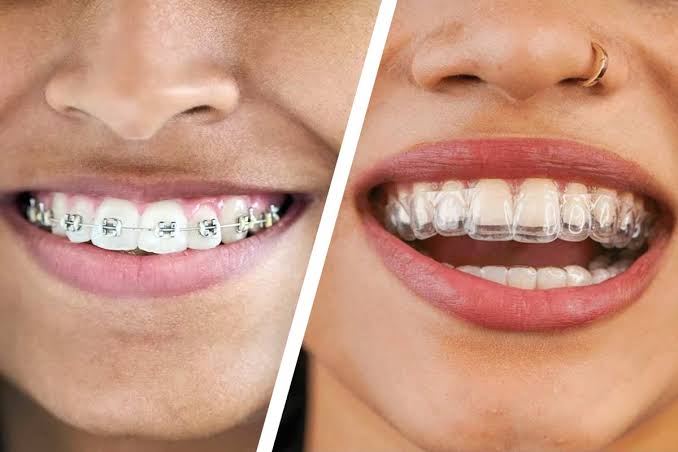
Lingual braces and clear aligners solve the same practical concern in different ways: both make orthodontic treatment less obvious from the front. Lingual braces are fixed to the inside surfaces of the teeth. Clear aligners are removable plastic trays worn over the teeth. The practice’s orthodontic appliance guide places both options alongside other treatment choices.
The better option is not decided by which one looks less noticeable in a photograph. Your bite, the movements required, how reliably you can wear removable trays, cleaning, speech, work and budget all belong in the decision.
How lingual braces work
Lingual braces use brackets and wires, but the brackets sit behind the teeth. Because the inside shape of an arch differs from the outside, the appliance and wire mechanics require specific planning.
Dr Nevenka Tadic holds advanced training in lingual orthodontics. That is a relevant qualification to state plainly because this technique is not simply conventional braces moved to another surface.
How clear aligners work
Clear aligners are a planned series of removable trays. Each tray applies controlled forces to selected teeth, sometimes with small tooth-coloured attachments bonded to the front surfaces.
Aligners need consistent wear. Removing them for meals is convenient, but it also creates the main risk: a tray cannot move teeth while it is sitting in its case.
Which is less visible?
Lingual brackets are hidden behind the teeth in ordinary frontal view, although they can sometimes be seen when the mouth opens widely. Clear aligners are transparent rather than invisible. Their edges, attachments and reflections may be noticeable at conversational distance.
Visibility is personal. Someone who speaks on camera may judge the options differently from someone mainly concerned about photographs.
Speech and early adaptation
Both options can temporarily affect speech. Lingual braces occupy tongue space and can make certain sounds feel unfamiliar. Aligners cover tooth surfaces and may produce a slight lisp until the tongue adapts.
Reading aloud and speaking normally can help. Persistent speech difficulty should be discussed rather than hidden, particularly where clear communication is central to a person’s work.
Eating and drinking
Lingual braces remain in place for meals, so hard and sticky foods may need to be avoided and food can collect around the brackets. Clear aligners are generally removed for eating and for drinks other than plain water, then the teeth are cleaned before reinsertion.
Frequent snacking can make aligner wear harder to maintain. For someone who cannot remove and clean trays during the workday, a fixed option may be simpler despite the dietary rules.
Cleaning and oral health
Both require deliberate hygiene. Lingual brackets are harder to see, so brushing and interdental cleaning need patience and good technique. Aligners must go back over clean teeth; otherwise, plaque, food and acidic or sugary residue can be held against them.
Healthy gums and controlled decay are important before treatment. Regular general dental care continues while the orthodontist manages tooth movement.
Control, complexity and compliance
Fixed appliances work continuously and do not depend on remembering to insert a tray. Aligners give the patient more control over removal but require disciplined wear and safe storage.
Neither method should be described as suitable for every complex movement. Modern aligner systems can manage many cases, while fixed appliances can provide useful control in others. Sometimes a combined or staged approach is considered.
Appointments, breakages and travel
Lingual braces need adjustment and can require attention if a bracket or wire causes trouble. Replacement components may be highly customised. Aligners are changed according to a schedule, but lost trays, poor fit or attachments coming off still need advice.
Before travel, ask what to take, which tray to use if plans change, and how to contact the practice. Do not advance several trays or cut a fixed wire without instructions.
How to make the choice
Ask what movements are needed, why the clinician recommends one appliance, what compromises each creates, and whether a different option changes the treatment objective. Compare the full fee and inclusions only after comparing the same scope.
A useful decision is one the patient can live with consistently. The most discreet appliance is not useful if its routine makes adherence unrealistic.
What about comfort?
Neither option should be sold as pain-free. Lingual brackets can rub the tongue and create pressure after wire changes. Orthodontic wax and the practice’s care instructions can help during adaptation. Clear aligners can cause pressure when a new tray is fitted and may irritate the edge of the gum or cheek if a tray is damaged or does not fit correctly.
The source of discomfort matters. General pressure that settles is different from a sharp wire, fractured tray, ulcer that is not healing or pain focused on one tooth. Contact the practice when discomfort is severe, worsening or unusual rather than assuming it is simply part of treatment.
Comparing costs properly
Lingual appliances are highly customised in many systems, while clear aligner fees can reflect the number of planned stages, refinements and monitoring. A quote should state what is included: records, appliance manufacture, routine visits, breakages or replacement trays, refinements, removal and retainers.
Do not compare an advertised starting price with a complete treatment proposal. The less expensive figure may describe a limited case or omit items included elsewhere. These options can be discussed during an adult orthodontics consultation. Michael Woods Orthodontics has not supplied an approved public fee for this article, so no estimate has been inserted.
Private health benefits depend on the member’s extras policy, lifetime orthodontic limit, waiting periods and claiming rules. Obtain the relevant item information from the practice and ask the fund directly what it will pay.
Can the plan change after treatment starts?
It can. Teeth do not always respond exactly as a digital or mechanical plan predicts. An aligner case may need refinement trays, new attachments or a period of fixed treatment. A lingual case may need wire or anchorage changes as the bite develops.
A change does not automatically mean the original plan was poor. It should, however, be explained: what has changed, why the adjustment is recommended, whether objectives or fees are affected, and what alternatives remain. The patient should understand the next decision before proceeding.
Questions to compare at your consultation
Ask the orthodontist to compare the options against your diagnosis and daily routine:
- What is the underlying tooth or jaw problem?
- Which part of the proposed treatment addresses it?
- What reasonable alternatives apply to my case?
- What are the material risks and practical limitations?
- What happens if the expected response does not occur?
- Which other dental or medical practitioners need to be involved?
- What is included in the written fee and what could be separate?
- What retention or follow-up will be needed afterwards?
Take time to understand the answers. Orthodontic treatment is planned over months or years, so a low-pressure decision based on complete information is more useful than choosing quickly from a headline.
Book an initial consultation
Michael Woods Orthodontics is a specialist orthodontic practice on Dandenong Road, on the Malvern/Armadale border. Professor Michael Woods and Dr Nevenka Tadic both hold specialist registration in orthodontics. An assessment can establish what the concern is, whether treatment is appropriate and which options reasonably apply.
Call (03) 9509 7496 or use the contact form to request an initial consultation.
Frequently asked questions
Are lingual braces completely invisible?
They are hidden behind the teeth in most ordinary views, but no appliance should be described as invisible in every situation.
Are clear aligners removable?
Yes. They are usually removed for meals and cleaning, then worn according to the prescribed schedule.
Which option affects speech more?
Either can affect speech during adaptation. Lingual brackets alter tongue space, while aligners cover tooth surfaces. Individual response varies.
Can lingual braces treat complex cases?
They can be used for many movements, but suitability depends on the bite, tooth shape, access, periodontal health and clinician’s assessment.
Can clear aligners treat every bite problem?
No appliance suits every case. Aligners can manage many conditions, but fixed or combined treatment may be recommended where different control is needed.
Which is easier to clean?
Aligners can be removed, making tooth cleaning more direct, but they must be kept clean and worn over clean teeth. Lingual braces need careful cleaning around less visible brackets.
Which costs more?
Fees vary with complexity, appliance manufacture, treatment length and inclusions. Request an individual written quote; this article does not invent a practice fee.
How do I decide between them?
Start with diagnosis and treatment objectives, then compare visibility, wear discipline, speech, eating, cleaning, appointments and total scope.
Leave a Reply