

What Is a Crossbite and Why Should It Be Corrected Early
Have you ever watched your child bite down and noticed their jaw slides sideways, or that some of their upper teeth seem to sit on the wrong side of their lower ones? It is a moment that catches a lot of Armadale parents off guard. Many assume it is just a phase, that things will sort themselves out as the adult teeth come through. Unfortunately, in the vast majority of cases, they do not.
A crossbite is one of those orthodontic issues that rarely fixes itself, and the longer it goes without assessment, the more complicated treatment becomes. The good news is that catching it early makes a real difference, and families across Melbourne’s inner south have access to specialist care right on their doorstep. Michael Woods Orthodontics is just minutes from Armadale and offers specialist orthodontic assessment with no GP referral required.
What Is a Crossbite? Understanding This Type of Malocclusion
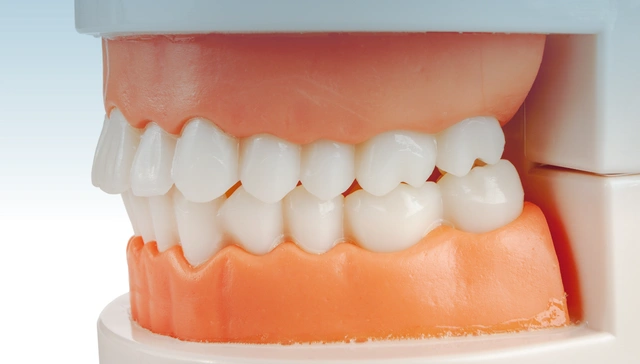
A crossbite is a type of malocclusion, which is the technical term for a misaligned bite. In a normal bite, the upper teeth sit slightly outside and in front of the lower teeth, a bit like a lid sitting over a box. With a crossbite, one or more of the upper teeth bite inside the lower teeth instead of outside them. It is essentially the reverse of what should happen.
Crossbites can be dental or skeletal in nature. A dental crossbite is a tooth-position issue, where one or a few teeth have simply grown in the wrong spot. A skeletal crossbite is more complex and involves the underlying jaw structure. Whether the crossbite is dental or skeletal changes the treatment approach significantly, which is exactly why a specialist orthodontist assessment, rather than a general dental check, is so important.
The Two Main Types of Crossbites
Anterior Crossbite (Front Crossbite)
An anterior crossbite involves the front teeth. One or more of the upper front teeth sit behind the lower front teeth when the mouth is closed, which is the opposite of the correct position. It is sometimes confused with an underbite, though the two are different conditions.
The appearance of a crossbite at the front of the mouth is a red flag, particularly in children. Upper front teeth sit behind the lower front teeth in a way that can affect jaw development, tooth wear, and even speech. Early assessment is strongly recommended.
Posterior Crossbite (Back Teeth)
A posterior crossbite affects the back teeth, either on one side (a unilateral crossbite) or both sides of the mouth. It is commonly linked to a narrow upper jaw, where the upper arch is not wide enough to sit properly over the lower arch.
One of the telltale signs is a midline shift: the lower jaw deviates to one side when the mouth closes. A buccal crossbite, where the lower back teeth sit outside the upper back teeth, is a less common variation. A posterior crossbite can also affect multiple teeth across both sides of the mouth.
Causes of Crossbite: What Leads to This Condition?
Crossbite is caused by a mix of genetic and environmental factors. Understanding what is behind a child’s crossbite helps the orthodontist plan the most appropriate treatment. The main contributing factors include:
- Genetics: Jaw size mismatch between parents is one of the most common causes. A child can inherit a narrow upper jaw from one parent and a wider lower jaw from the other.
- Delayed loss of baby teeth: When baby teeth stay in place too long, adult teeth can erupt in the wrong position.
- Prolonged thumb sucking or dummy use: Extended sucking habits in early childhood can affect the shape of the palate and the alignment of the teeth.
- Mouth breathing: Chronic mouth breathing changes the resting position of the tongue, which, over time, affects how the upper jaw develops.
- Tongue-thrust habits: Pushing the tongue forward or sideways during swallowing can alter tooth position.
- Narrow upper jaw: A naturally or developmentally narrow upper jaw is one of the most frequent underlying causes, particularly of posterior crossbite.
- Jaw trauma: In rare cases, injury to the jaw during development can lead to asymmetric growth.
Why Leaving a Crossbite Untreated Creates Bigger Problems: Early Intervention Matters
This is the part that is really worth paying attention to. A crossbite does not resolve on its own. The development of a crossbite left without treatment tends to follow a predictable path of escalation. What starts as a minor dental issue in a young child can become a complex, costly problem in an adult. Here is what the research and clinical evidence tell us about the consequences of waiting.
1. Asymmetric Jaw Growth
This is one of the most compelling reasons for early intervention in children. Research published in Orthodontics and Craniofacial Research (2024) found that roughly 1 in 5 growing children who had posterior crossbite corrected showed signs of relapse long-term, which is why timing matters so much. Treating while the jaw is still growing gives far better outcomes.
A posterior crossbite causes the jaw to shift sideways every time the child bites down. Over months and years, this repeated deviation affects how the jaw grows. Research confirms that unilateral posterior crossbites produce morphological and positional asymmetries of the mandible in young children, and that these asymmetries can largely be resolved with early expansion therapy. Left untreated, the asymmetry can become permanent.
2. Uneven Tooth Wear and Gum Recession
Teeth in crossbite absorb forces they were never designed to handle. Over time, this accelerates enamel wear and chipping, particularly on the lower front teeth in an anterior crossbite. Gum recession can follow, which can become a more involved problem to manage as an adult.
3. Jaw Joint (TMJ) Problems
When the jaw is forced to shift sideways with every bite, the temporomandibular joint (TMJ) has to compensate. Adults who had an untreated crossbite as children frequently present with jaw clicking, morning jaw aches, and tension headaches. These symptoms are often the first sign that a bite problem has been quietly doing damage for years.
4. Speech and Eating Difficulties
An anterior crossbite can interfere with the pronunciation of certain consonants. Children often adapt without realising, developing slight compensatory speech patterns. A posterior crossbite can make chewing on the affected side uncomfortable, so children naturally favour the other side of the mouth, which creates its own muscle imbalance over time.
Signs of a Crossbite: What to Look For
If your child might have a crossbite, here are the things to watch for:
| Sign | What It Might Indicate |
|---|---|
| Jaw shifts to one side when biting down | Functional posterior crossbite |
| Upper front teeth sit behind the lower front teeth | Anterior crossbite |
| Uneven tooth wear on specific teeth | Crossbite causes abnormal force |
| Midline shift (centre of top and bottom teeth do not align) | Unilateral crossbite with deviation |
| Jaw clicking or soreness | TMJ stress from compensating bite |
| Child is chewing only on one side | Posterior crossbite discomfort |
How Specialist Orthodontists Near Armadale Diagnose a Crossbite
The diagnostic process at Michael Woods Orthodontics in Melbourne goes well beyond a quick visual check. Determining whether the crossbite is dental or skeletal requires a thorough clinical assessment.
The diagnostic process typically includes:
- Clinical examination: The orthodontist observes the bite at rest and in motion, noting any midline shift or jaw deviation.
- Digital intraoral scans: These create precise 3D models of the teeth and arches without the discomfort of traditional impressions.
- X-rays, including cephalometric X-rays: A lateral skull X-ray (cephalometric) is particularly important for assessing skeletal crossbites, as it shows the relationship between the upper and lower jaws at a structural level.
- Bite analysis: This identifies where and how the teeth are making contact, and whether any molar or other tooth is causing the jaw to deflect.
Professor Michael Woods brings over 35 years of specialist experience to every assessment. Dr Nevenka Tadic is also a registered specialist orthodontist. Two specialists under one roof means that complex cases receive expert input from the outset.
Crossbite Treatment Options at Every Age: Children and Adults
One of the most reassuring things to know is that crossbite treatment is effective at any age. That said, treating children while their jaws are still growing is significantly less complex, less expensive, and produces more stable results than treating adults. Here is how orthodontic treatment varies by age.
Treatment Comparison by Age Group
| Sign | What It Might Indicate |
|---|---|
| Jaw shifts to one side when biting down | Functional posterior crossbite |
| Upper front teeth sit behind the lower front teeth | Anterior crossbite |
| Uneven tooth wear on specific teeth | Crossbite causes abnormal force |
| Midline shift (centre of top and bottom teeth do not align) | Unilateral crossbite with deviation |
| Jaw clicking or soreness | TMJ stress from compensating bite |
| Child is chewing only on one side | Posterior crossbite discomfort |
Children (Ages 6 to 10): The Best Window for Correction
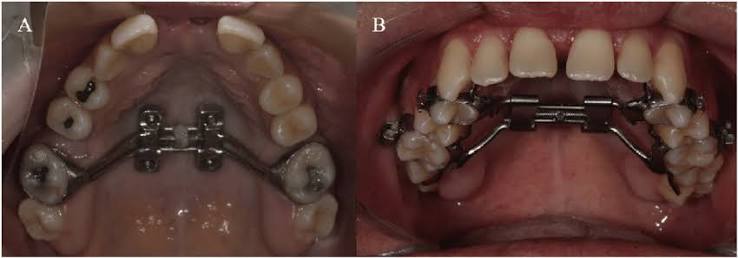
Children whose jaws are still growing and developing offer the best opportunity for crossbite correction. The palatal suture (the growth plate at the centre of the upper jaw) has not yet fused, which means a palate expander or palate expander appliance can gently widen the upper jaw over several months with relatively little discomfort.
Whether you’re an adult finally considering treatment you never got as a teenager, or a parent exploring options for your child, we’ll walk you through every aspect of the proposed treatment plan and fee structure at your first consultation. No pressure, no surprises.
We are proudly a dental clinic that treats patients of all ages, from early orthodontic intervention in children to complete treatment for adults. Our team works closely with your regular dentist to ensure your dental health is supported throughout the entire process.
Common orthodontic appliance options for children include:
- Removable plates with springs: Used to tip individual teeth into the correct position, particularly for anterior crossbite involving just one or two teeth.
- Limited braces on select teeth: Can be used to move specific teeth efficiently.
- Reverse-pull headgear: Used where an anterior crossbite is caused by underdevelopment of the upper jaw, this appliance encourages forward jaw growth.
Most children who have their first orthodontic assessment by age 7-8 and are found to have a crossbite can complete early interceptive treatment within 6 to 12 months. The Australian Dental Association recommends early mixed dentition assessment for crossbites, given that effective orthodontic appliances exist for this stage of development.
For more on early signs to look for, read our post on Early Signs of Crowding Every Armadale Parent Should Watch For and Early Interceptive Orthodontics in Armadale: Why Treating Children Between Ages 7-10 Can Change Everything.
Teenagers (Ages 11 to 17)
By the teenage years, most of the adult teeth have come through, and the jaw is still growing, though at a slower rate. Comprehensive orthodontic treatment with full braces or clear aligners can address the dental component of crossbites effectively.
Where the narrow upper jaw is still a factor, expansion may be incorporated into the overall treatment plan. Traditional braces remain a highly effective option, as does Invisalign for crossbite in suitable cases. Most Armadale teenagers who commence orthodontic care do so during this window, and crossbite correction forms part of their broader alignment treatment.
Adults: What Are the Options for Crossbite in Adults?
A dental crossbite in an adult can often be corrected with braces for crossbite or with Invisalign, depending on the severity and number of teeth involved. Invisalign for crossbite correction has become increasingly effective as aligner technology has advanced, and clear aligners are a popular choice among adult patients who want a more discreet option.
A skeletal crossbite in adults, where the jaw structure itself is the issue, is more involved. Because the palatal suture has fused, a palate expander alone is not sufficient. Options may include:
- Surgically Assisted Rapid Palatal Expansion (SARPE): A procedure where the palatal suture is surgically loosened to allow expansion, combined with orthodontic treatment with braces or aligners.
- Orthognathic surgery combined with orthodontics: For significant skeletal discrepancies, jaw surgery repositions the upper and/or lower jaws, with orthodontic treatment before and after to achieve the best possible result.
It is worth being upfront: adult crossbite treatment requires more time and investment than treating the same crossbite in a child. That is not a reason to delay treatment now, but it is a strong reason to bring children in for assessment early.
Why Armadale Families Trust Michael Woods Orthodontics in Melbourne
Families from Armadale, Malvern, and the broader Melbourne inner south choose Michael Woods Orthodontics for a number of practical and clinical reasons.
What sets the practice apart:
- Two registered specialist orthodontists with significant experience across all age groups
- Comprehensive diagnostic capability including digital scans and cephalometric X-rays
- Personalised treatment plans for each patient, not a one-size approach
- Convenient location at 549 Dandenong Road, Malvern, approximately 3 km from Armadale
- Saturday appointments available for families who need flexibility around school and work
- No GP referral required for a first consultation
Professor Michael Woods has been treating orthodontic patients in Melbourne for over 35 years. Dr Nevenka Tadic brings specialist expertise across both child and adult cases. Together, they manage everything from simple dental crossbites to complex skeletal presentations that require a coordinated approach to oral health.
For a deeper understanding of crossbite treatment options, visit our dedicated crossbite treatment page.
Book Your Crossbite Assessment Near Armadale
If you have noticed signs of a crossbite in your child, or if you are an adult who has been told your bite is off and never done anything about it, now is a good time to get a specialist opinion.
An early assessment at Michael Woods Orthodontics in Melbourne will confirm whether a crossbite is present, what type it is, and what the most appropriate treatment plan looks like for your child’s age and situation. Getting on top of it early saves time, saves complexity, and protects your child’s jaw development in ways that matter long term.
Michael Woods Orthodontics 549 Dandenong Road, Malvern VIC 3144 Phone: (03) 9509 7496 Approximately 3 km from Armadale. Saturday appointments available. No GP referral required.
Frequently Asked Questions About Crossbite
Can a crossbite fix itself as my child grows?
No. A crossbite does not self-correct. The jaw and teeth continue to develop, but the misalignment will not resolve without treatment, and the consequences tend to worsen over time.
What is the best age to treat a crossbite?
Between the ages of 6 and 10 is ideal. The jaw is still actively growing, the palatal suture is still open, and the orthodontic appliances needed are less invasive. Assessment from age 7 is recommended.
Is Invisalign effective for crossbite correction?
Yes, in many cases. Invisalign for crossbite works well for dental crossbites, particularly in teenagers and adults. Skeletal crossbites may require additional orthodontic appliance support or, in adults, a surgical component.
Will my child need an expander or just braces?
It depends on the type of crossbite. A posterior crossbite with a narrow upper jaw usually involves a palatal expander, often followed by braces. An anterior crossbite involving one or two teeth may only require a removable plate or limited braces for crossbite correction.
Does a crossbite affect more than just appearance?
Yes, significantly. A crossbite is not a cosmetic issue alone. Leaving a crossbite untreated can lead to jaw growth problems, uneven tooth wear, TMJ discomfort, gum recession, and speech difficulties. Early corrective treatment protects long-term oral health.
Leave a Reply